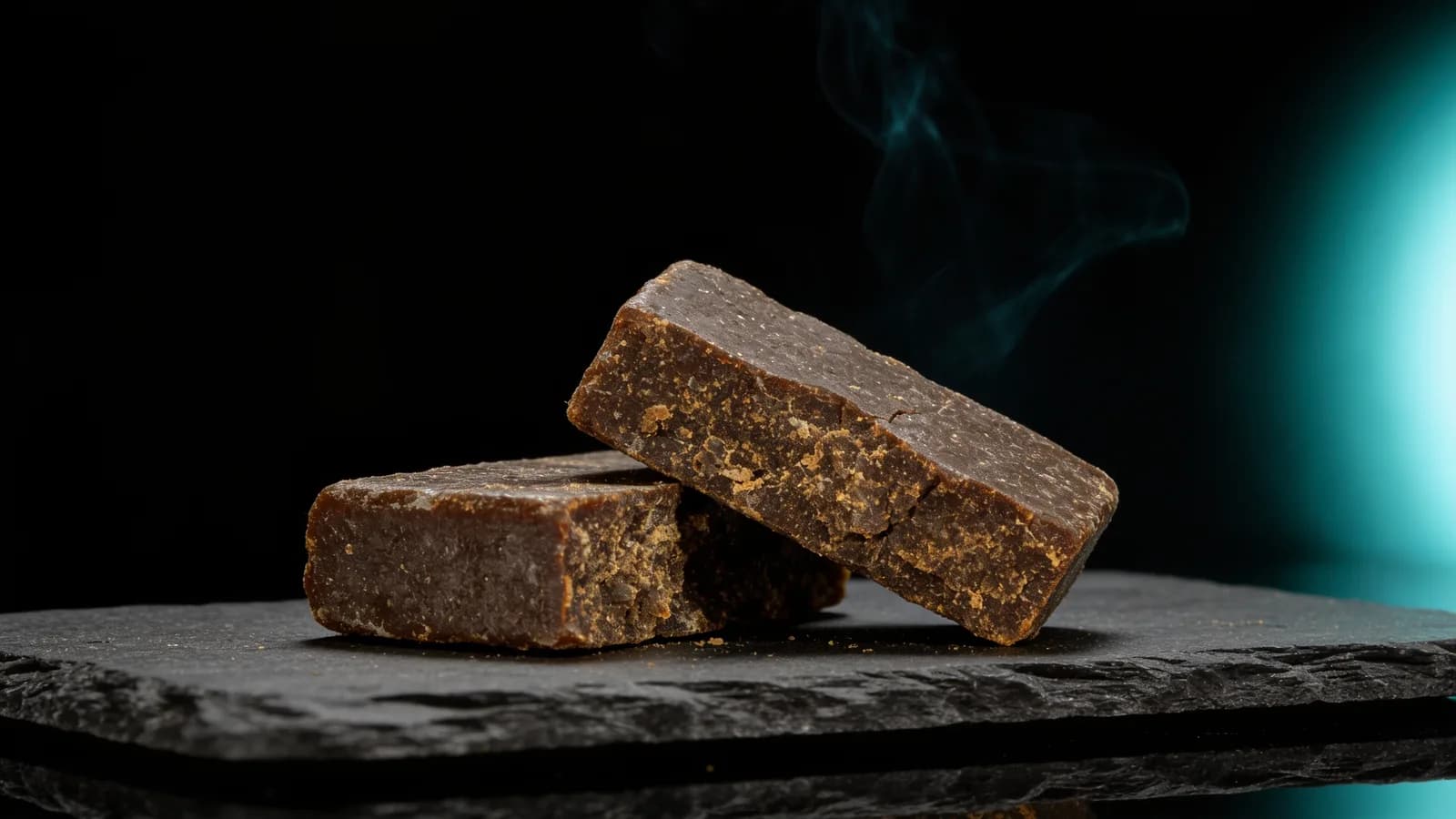
What Is Hash?
Types of hash all start in the same place: the frost on good cannabis. That frost is millions of tiny resin glands called trichomes, where the plant keeps its THC and terpenes. Collect those glands, press them together, and you have hash.
It is the original concentrate, made for well over a thousand years before anyone owned a rosin press. Every type of hash on a menu is a different answer to one question: how do you get the resin off the plant?
How Hash Is Made: The 3 Methods Behind Every Type
Dry sift hash
Dried flower is beaten or shaken over fine screens until the trichomes fall through as a powder. That powder is kief. Pressed with heat into a block, it becomes dry sift hash, the method behind Moroccan and Lebanese styles.
The first, gentlest sift carries the least plant matter and makes the lightest grades. Each extra pass pulls more plant matter through, which darkens the colour and lowers the grade.
Hand-rubbed hash (charas)
Live, flowering plants are rubbed between the palms until resin builds up on the skin, then it is rolled off and shaped. That is charas, the Himalayan tradition. It is soft, sticky and clay-like, with a strong, aromatic smell.
Ice water hash (bubble hash)
Cold water and ice make the trichomes brittle, stirring snaps them off the flower, and mesh bags catch them by size. Dried, the result is bubble hash, also called ice water hash.
Nothing touches the resin but ice, water and screens, so it is fully solventless. Full melt grades melt cleanly enough to dab, and pressing ice water hash with heat is how live hash rosin is made.
Types of Hash by Style
Hash names on a menu usually describe a style: the method, colour and texture a region made famous. Every piece on our wall is made in-house in BC, so the names below tell you how a hash is made and how it smokes, not where it was made.
Afghan hash
The classic dark hash. Sifted resin is worked by hand, often with a little heat and water, into dense, pliable slabs that look nearly black outside and soft brown inside. Expect an earthy, spicy, old-world flavour and a heavier, relaxing feel.
On our wall that style runs through Mazar E Sharif, Afghani Sword, Kabul Freedom Fighter and Afghan Palm Tree.
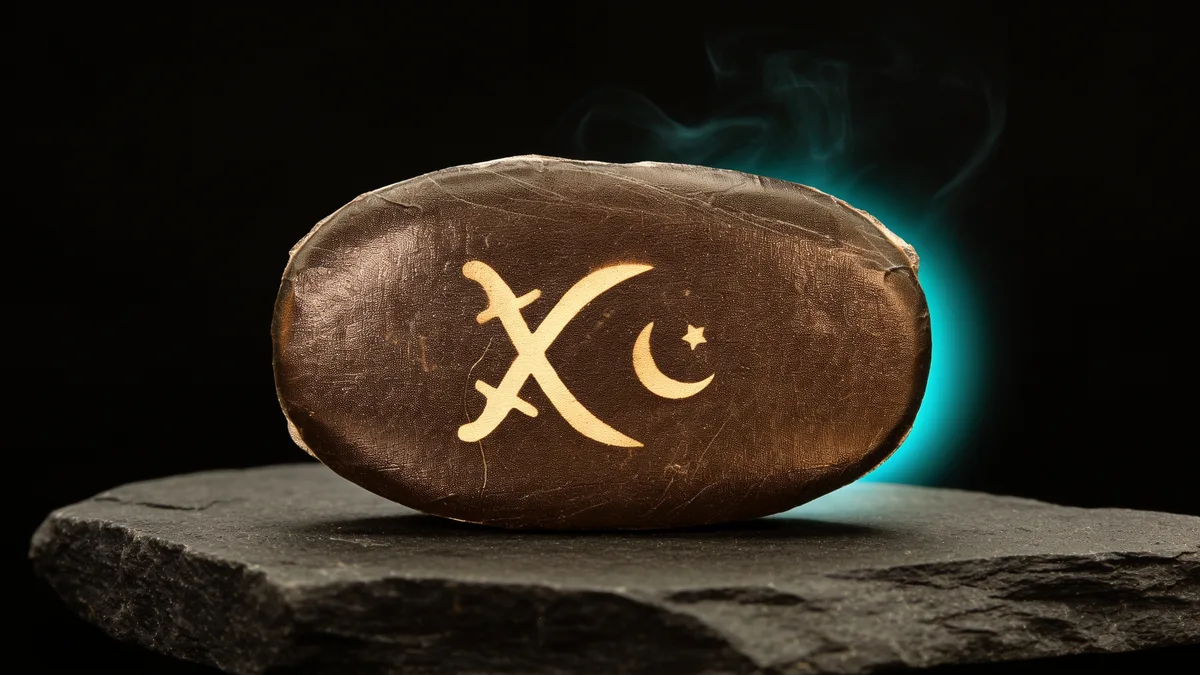
Moroccan hash
Moroccan hash is the classic dry sift style: lighter in colour, drier and more crumbly, with a smooth, mellow smoke. Light golden Moroccan is often called blonde hash. Moroccan-style pressings come and go on our wall, so check the hash wall for what is in stock.
Lebanese hash (red and blonde)
Lebanese hash is another dry sift style, traditionally sold as blonde or red. The red comes from letting the plants ripen longer before sifting, which shifts the colour toward reddish-brown and the flavour toward a richer, spicier side.
Himalayan charas and Malana cream
Charas is the hand-rubbed type, and Malana in India's Parvati Valley made it famous. Malana cream is the name for the soft, top-grade charas from that village. Our Malana Elephant is made in that Himalayan style, with a sweet, spicy and floral nose.
Temple ball hash
Temple balls are hash that is rolled and kneaded into a ball, then cured so the outside forms a skin while the inside stays soft. The curing deepens the flavour over time. Our Tree of Life temple ball is a sativa-leaning one with an orange creamsicle and sandalwood nose, at $45 for 3.5g.
BC fruit hash
The newest style on the wall: the traditional press applied to fresh BC trichomes from flavour-forward strains. These keep the strain's taste, like Blueberry, Banana, Grape and Strawberry Cough, and start at $20 for 3.5g.
Black Hash vs Blonde Hash: What the Colour Means
Black hash is usually dark because of how it was worked, not because it is old or burnt. Hand-pressing with heat and moisture darkens the outside, so Afghan-style slabs can look almost black while staying soft inside.
Blonde hash is usually dry sift that was pressed lightly. A pale gold colour often means a clean first sift with little plant matter.
Colour alone doesn't prove quality. A good piece softens with the warmth of your hand, smells strong, and burns without spitting thick black smoke. A brick that stays rock-hard and smells of nothing is the one to skip.
Bubble Hash and Full Melt
Bubble hash is graded on a six-star scale, and the stars answer one question: how cleanly does it melt? One and two star still carries plant matter and is best for cooking.
Three and four star, called half melt, melts partly and works well in bowls and joints. Five and six star is dab grade, and true six star is full melt: it melts away on a hot surface and leaves almost nothing behind.
Full melt runs are small and sell through fast. For the same solventless family, see live hash rosin.
Hash vs Kief, Rosin and Weed
- Hash vs kief: kief is the loose trichome powder; hash is that powder pressed into a solid. Pressing protects the resin, so hash keeps its smell and strength far longer than loose kief.
- Hash vs rosin: rosin is made by pressing flower or hash between heated plates until the resin flows out as an oil. Pressing ice water hash this way gives hash rosin, a solventless step up from hash.
- Hash vs weed: weed is the dried flower; hash is the flower's resin on its own. Our pressed hash is labelled around 40% THC, and the AAA hash around 45%, versus roughly 20 to 30% for strong flower.
How to Smoke Hash
Pressed hash doesn't stay lit on its own, so it is usually smoked with flower.
- In a joint: warm the piece in your fingers until it crumbles, then mix it with flower, or roll a thin snake of hash along the joint.
- In a bowl or bong: lay a bed of flower first and set the hash on top, so melting resin doesn't clog the bowl.
- Hot knives: the old Canadian method, with two heated knives and a cut-off pop bottle to catch the smoke.
- Dabbing: only five and six star full melt. Pressed hash scorches on a banger and tastes burnt.
Because hash is stronger than flower, start with a smaller amount than you would roll with weed alone.
Does Hash Go Bad?
Hash lasts much longer than flower, because pressing seals the resin away from air. Over many months it slowly dries out, darkens, and loses smell and strength, but it doesn't spoil the way food does.
The signs that a piece is past it are a dull, faint smell, a hard and brittle texture, or any fuzzy spots, which mean mould. Our best hash in Canada guide covers how to store it so it stays fresh.
Where to Buy Hash Online in Canada
The VanCity Labs hash wall carries the styles above, from Afghan-style slabs and Himalayan-style hand-rub to a cured temple ball and BC fruit pressings. All of it is made in-house in BC.
Pressed hash starts at $20 for 3.5g and runs $120 for an ounce. Every order ships Canada-wide in discreet packaging by tracked mail.