Where the Words Indica and Sativa Came From
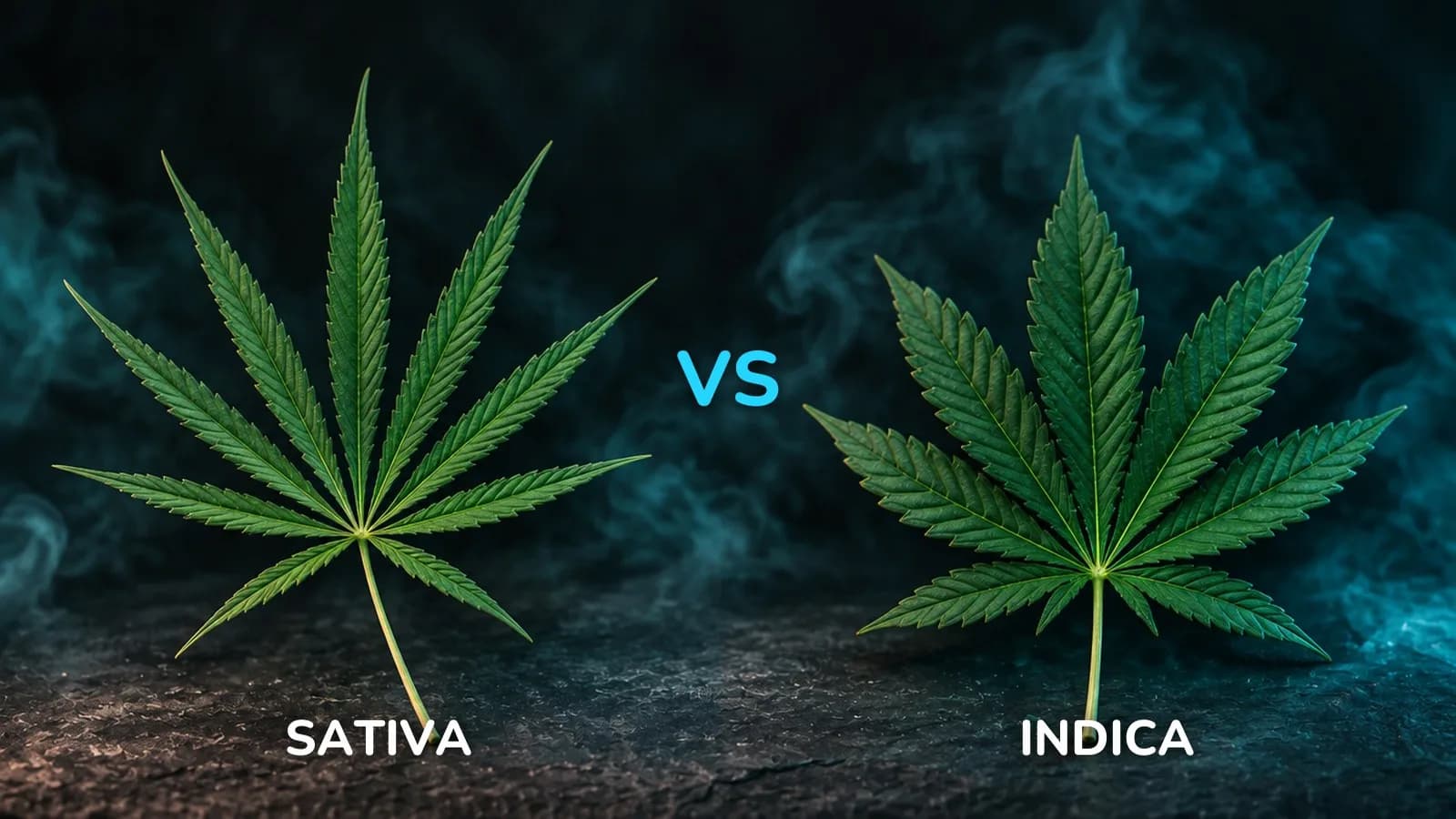
The difference between indica and sativa started as a difference in how the plants looked. They were plant words long before they were effect words. Linnaeus named Cannabis sativa in 1753 and treated cannabis as one species. In 1785 the French naturalist Lamarck described a second one, Cannabis indica, from plants collected in India. His version was short, bushy and broad-leafed. Sativa was tall, lanky and narrow-leafed.
That is the whole origin: height, branching and leaf width. The jump to "indica relaxes, sativa energizes" came later, when growers and sellers noticed patterns and turned them into shorthand. It is useful shorthand. It was never a rule.
Indica vs Sativa vs Hybrid: What the Label Suggests and What Decides It
| Label | What the label suggests | What actually decides it |
|---|---|---|
| Indica | Commonly sold as calmer, heavier and body-first, an evening pick | The terpene mix (myrcene is the one most tied to the indica label), THC level, dose, your tolerance |
| Sativa | Commonly sold as brighter, clearer and head-first, an earlier-in-the-day pick | The terpene mix (terpinolene-heavy flower is where sativa labels cluster), THC level, dose, your tolerance |
| Hybrid | A cross of the two, so it can lean either way; "indica-dominant" or "sativa-dominant" says which | The individual strain, which is why two hybrids can feel nothing alike |
The middle column is the marketing. The right column is what you are actually buying.
Indica vs Sativa Effects: What People Commonly Report
Start with what shoppers say, since that is where the labels came from.
Indica. People commonly describe a heavy, settled feeling in the body, a calmer head, sleepiness as it wears on, and a bigger appetite. That is why it is the usual pick for evenings, movie nights and winding down.
Sativa. People commonly describe a lighter, clearer head, more talk and more get-up-and-go, which is why it is the usual pick for daytime, creative projects and being out and about. Some people also find a strong sativa a bit racy, so go slower if you are sensitive.
Hybrid. People commonly describe a mix, and where it lands depends on the strain.
Strength is a separate question. The label does not set it, THC does. In our own jars the indicas come in between 28% and 32% THC and our California Citrus sativa at 30%, so a sativa is not automatically the lighter option.
What the Research Says About Indica and Sativa Labels
Three studies are worth knowing, in plain terms.
In 2021, a team out of Dalhousie University compared more than 100 cannabis samples at over 100,000 spots in their DNA. Indica-labelled and sativa-labelled samples were genetically indistinct across the genome. What the labels did track was a small set of terpenes, with myrcene the strongest link to the indica label.
A year later, researchers analysed about 90,000 samples from six US states. The flower sorted into a few distinct chemical groups, but the indica, sativa and hybrid labels did not line up with those groups consistently. One group, heavy in the terpene terpinolene, held about twice as many sativa-labelled products as you would expect. The authors called the idea that indica sedates and sativa energizes "specious" given the chemistry.
Earlier, a 2015 genetic survey by Sawler and colleagues looked at 81 marijuana and 43 hemp samples. It found only a moderate link between a strain's genetics and its reported indica or sativa ancestry, and concluded that strain names often do not reflect a meaningful genetic identity.
So the label is a loose hint with a little truth in it. It is not a measurement.
So Why Do They Still Feel Different?
Because the labels are not random. Myrcene-rich flower tends to get called indica and terpinolene-rich flower tends to get called sativa, so the shorthand carries some real signal. People commonly describe myrcene-heavy flower as earthy and heavy, and terpinolene-heavy flower as lighter and brighter.
The other half is everything a label cannot see: how much THC is in the bud, how much you take, your tolerance, whether you have eaten, the time of day, and how fresh and well cured the flower is. Dose usually matters more than the label. A big session of the calmest indica can still go sideways, and a small one of a bright sativa can feel gentle.
What About Hybrids?
Most modern flower is a cross of indica and sativa lines, so most of what you will see in a jar is a hybrid of some kind. The "dominant" tag tells you which parent the breeder leaned on.
It also shows how much a label can hide. Tropicana Cherry, a hybrid we carry, comes in at 27% THC and is listed with euphoric, focused and uplifted effects. Blue Lobster, also a hybrid, comes in at 33% and is listed as euphoric, relaxed and happy. Same label, different ride.
Indica or Sativa for Sleep, Aches or a Daytime Session?
These are the three jobs people ask about most, so here is how shoppers commonly match them. Results vary from person to person.
- Sleep. People commonly reach for an indica or an indica-dominant hybrid with myrcene near the top of the terpene list, and save it for the evening.
- Aches and tension. People commonly pick a heavier indica for the body-relaxing feel. A higher THC jar is a stronger tool, so take less of it, not more.
- A daytime session. People commonly pick a sativa or a sativa-leaning hybrid, often at a lower THC, and keep the amount small so the day stays on track.
If a match misses, that does not mean you did it wrong. It is the label doing what labels do.
How to Pick When the Label Is Only a Hint
- Use the label as a starting direction. Indica for the evening, sativa earlier, hybrid in the middle.
- Read the terpene list. If myrcene sits high, people commonly find the flower heavier. If terpinolene shows up, people commonly find it brighter.
- Check the THC. Higher THC is stronger whatever the label says. If you are newer, pick lower and take less.
- Match the moment. A sofa night and a walk with friends are different jobs.
- Keep notes. After three or four jars you will know your own pattern better than any label does. Our strain quiz is a quick way to get a first shortlist.
Indica, Sativa and Hybrid Picks We Carry
Everything we sell is grown, cured and trimmed in-house in BC, with no middlemen. A few examples across the three labels:
- Indica: Pink Kush comes in at 28% THC and is listed as relaxed, euphoric and sleepy. Pine Tar comes in at 32% and is listed as a Pakistani landrace, the old-school end of indica.
- Sativa: California Citrus comes in at 30% THC, with a bright orange-citrus nose and an energetic, uplifted, focused listing.
- Hybrid: Tropicana Cherry and Blue Lobster, above, sit on opposite sides of the hybrid range.
Ready to browse? Shop the full shelves: indica strains, sativa strains and hybrid strains.