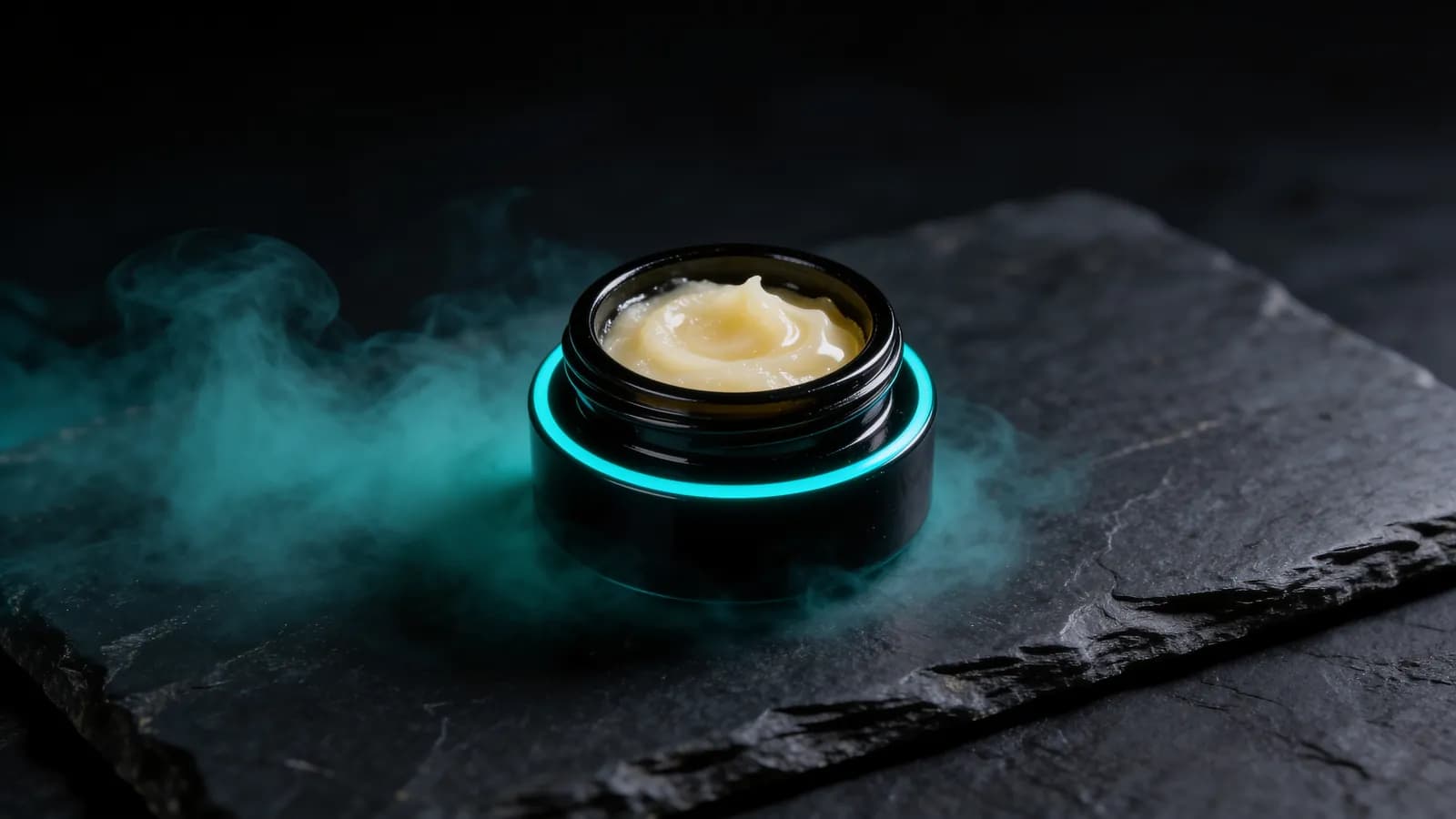
Live Resin vs Live Rosin vs Distillate at a Glance
All four start as the same plant and end up as very different oils. The short version: live resin and live rosin are both "live", meaning the plant was frozen at harvest so its terpenes survived, but they part ways on the solvent. Distillate throws the terpenes away to chase a purity number. Liquid diamonds are a cart-friendly blend of crystals and sauce that sits between the two. The table is the whole argument; the rest of this guide explains each row.
| Live resin | Live rosin | Distillate | Liquid diamonds | |
|---|---|---|---|---|
| How it's made | Fresh-frozen plant washed with butane or propane, then vacuum-purged | Fresh-frozen plant washed in ice water, hash pressed with heat and pressure | Crude oil winterised, decarbed and short-path distilled | THCA crystals from live resin melted into terpene sauce |
| Solvent | Hydrocarbon, purged off | None | Used upstream, removed by distillation | Hydrocarbon upstream |
| Typical THC | 60–90% | 60–85%, top lots 90%+ | 85–99% | 60–90%+ |
| Flavour | High, strain-true | Highest, strain-true | Near none unless terpenes are added back | High, from the sauce |
| Texture | Sauce, sugar or badder | Fresh press or cold-cured badder | Clear, thick, glassy | Clear-to-gold pourable oil |
| Best for | Dabs, carts, topping a bowl | Dabs, rosin carts, rolling into joints | Edibles, carts, DIY dosing | 510 carts and disposables |
| Cost per gram | Mid | Highest | Lowest per milligram of THC | Mid |
How Each One Is Made, and Why It Changes the Jar
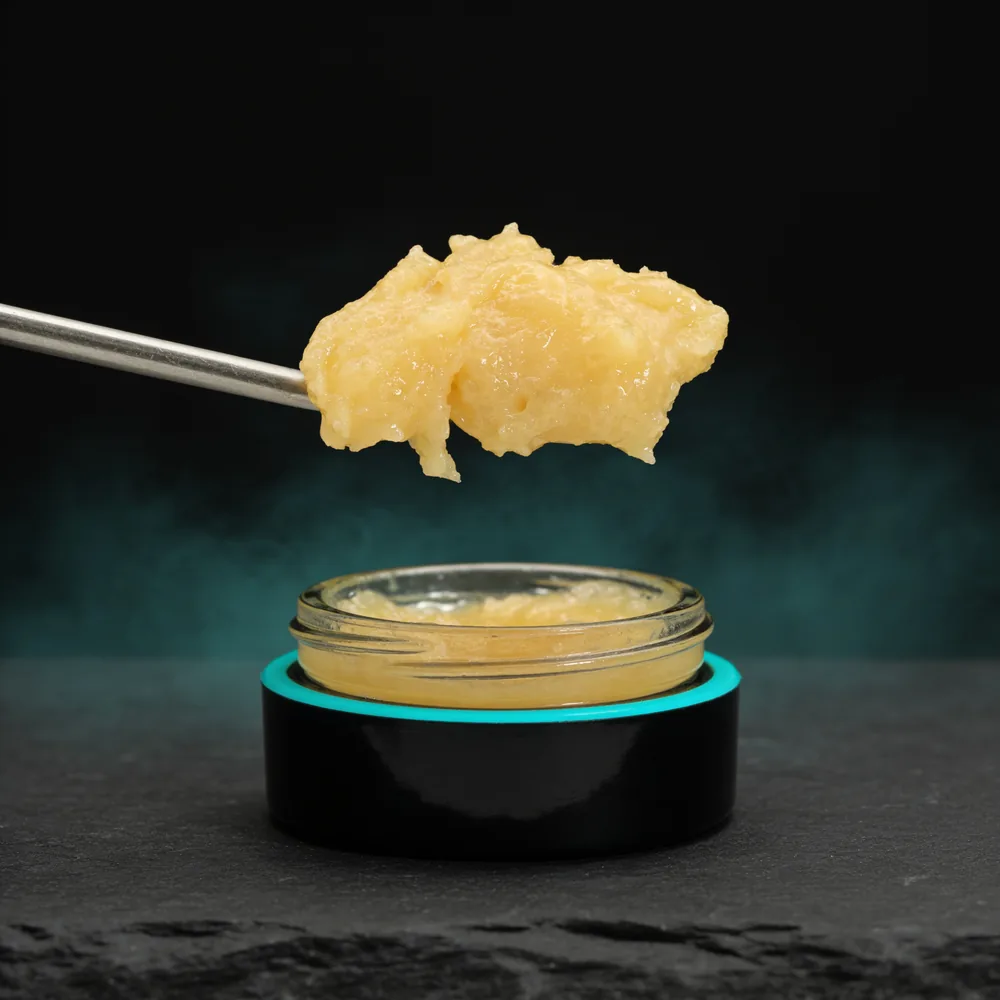
Live resin starts with plants frozen the moment they are cut, skipping the drying and curing that evaporates the most volatile terpenes. The frozen material is washed with butane or propane in a closed loop, then the solvent is vacuum-purged out of the oil. Because it never dried, the extract carries far more of the plant's aroma than the same strain would as shatter or cured resin. Our live resin guide walks through the full process.
Live rosin uses the same fresh-frozen start but no solvent at all. The frozen plant is agitated in ice water so the trichome heads snap off, the heads are filtered through mesh bags into bubble hash, the hash is dried, and then it is pressed between heated plates until the oil runs out. Heat and pressure only, so there is nothing to purge. The live rosin guide covers micron grades, full melt and cold curing.
Distillate goes the other way. A crude extract is winterised to remove fats and waxes, decarboxylated, then run through short-path distillation, sometimes several passes, until one cannabinoid is left at very high purity. The terpenes do not survive that heat, which is why distillate is nearly flavourless and why many producers add terpenes back afterwards.
Liquid diamonds are made by isolating THCA crystals from a live resin extract and melting or dissolving them back into terpene sauce until the whole thing pours. The result is a clear-to-gold oil built for 510 carts and disposables. If you can still see crystals, you are looking at diamonds and sauce, not liquid diamonds. And cured resin is simply live resin's cheaper cousin: the same hydrocarbon process run on dried, cured flower or trim, with a higher yield and fewer terpenes.
Potency: Which Concentrate Is Strongest?
On the label, distillate wins every time. Most distillate tests between 85 and 99% THC, live resin lands around 60 to 90%, and live rosin around 60 to 85%, with the best lots pushing past 90% (industry ranges from the Weedmaps concentrates guide). Liquid diamonds run 60 to 90% or more, because the crystals bring raw potency and the sauce brings flavour.
In the hand, the number is only half the story. Distillate is one molecule with everything else stripped out. Live resin and live rosin keep the full spread of terpenes and minor cannabinoids, and many dabbers find the same milligrams hit harder and feel more like the strain when that profile is intact. That is why "which is stronger" is the wrong question; ask which experience you are after. If you want the highest possible THC per dollar for edibles or DIY carts, distillate. If you want the strain, the live products.
Flavour and Texture
Ranked on flavour, live rosin and live resin sit at the top and are close enough that preference comes down to the strain and the wash, cured resin sits a clear step below, liquid diamonds behind that (the sauce carries flavour but the crystals dilute it), and distillate last unless terpenes have been added back.
Texture tells you a lot before you dab. Live resin is looser and wetter than most extracts because of its terpene load, and it shows up as sauce (crystals sitting in terp oil), sugar (THCA that has crystallised out of the sauce) or a whipped badder. Sugaring is not a defect; potency depends on the cannabinoid content, not the texture. Live rosin comes as a glassy fresh press or, more often, a creamy cold-cured badder that was rested in the cold until it set. Distillate is a clear, thick, honey-like oil that barely moves at room temperature. Liquid diamonds are a smooth pourable oil with no visible crystals.
Why Live Rosin Costs More and Distillate Costs Less
Price follows yield and labour. Washing fresh-frozen flower into heads-only hash and then pressing it returns roughly 2 to 5% of the starting weight as live rosin, and every step is done by hand. Hydrocarbon extraction pulls more oil from the same material, including mid-grade material, so live resin costs less per gram than rosin from the same strain. Distillation is the most scalable of all: it can start from trim or lower-grade input and still finish at 90%+ THC, which is why distillate is the cheapest concentrate per milligram of THC on almost any menu.
Read that as a spectrum rather than a ranking. You are paying for solventless purity and hand labour at one end, and for volume and a big THC number at the other. Live resin is the practical middle: most of the flavour of rosin at a price that makes daily dabbing realistic.
Which Concentrate Should You Buy?
Match the jar to what you are going to do with it:
- Dabbing for flavour: live rosin. Solventless, strain-true, dabbed low so the terpenes survive. The connoisseur's pick and the one worth stretching for.
- Dabbing every day on a budget: live resin. Most of the flavour, noticeably less per gram, and it drizzles onto a bowl or a joint just as well.
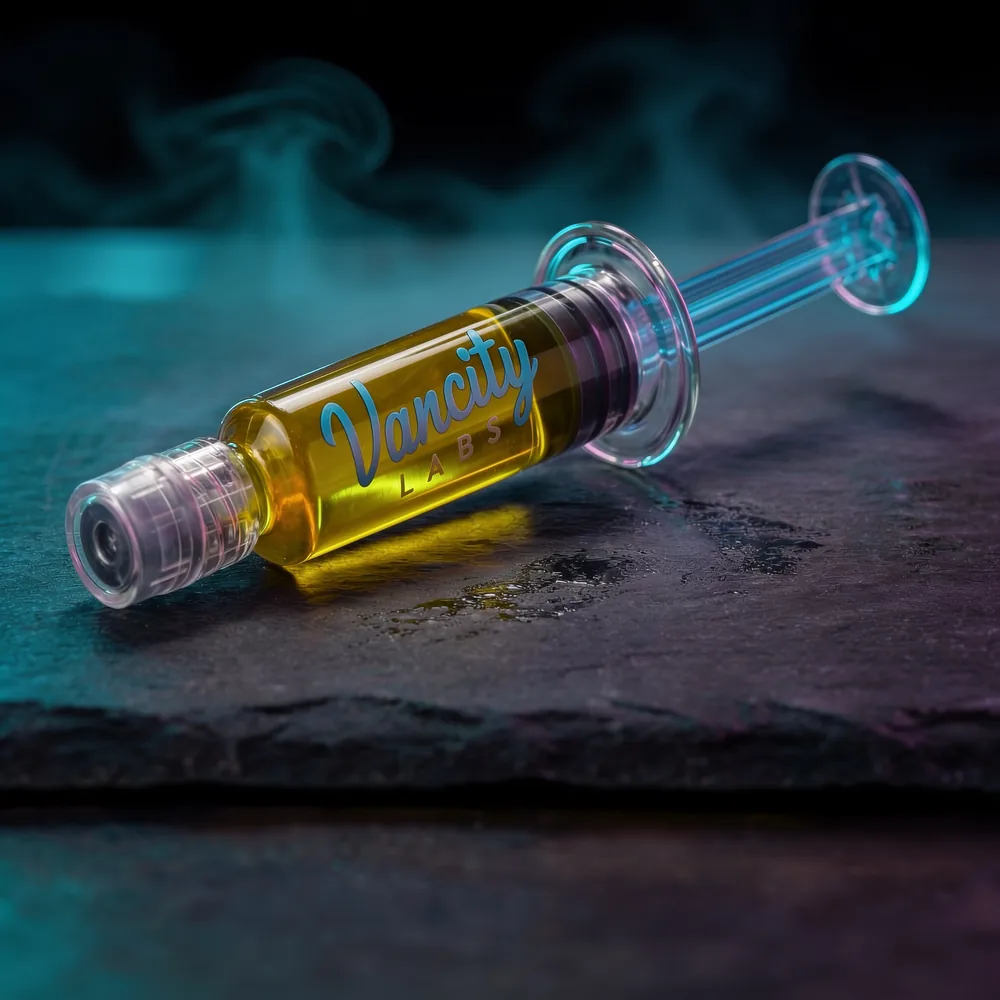
- Making edibles or dosing at home: distillate. It is already decarboxylated, so it mixes straight into food or oil, it is flavourless enough to disappear in a recipe, and it is the cheapest THC you can buy.
- Vape carts: liquid diamonds and live resin were built for this, and live rosin carts exist too. Our 510 carts shelf covers the range, including a solventless Frumpz live rosin cart.
- Maximum THC per dollar: distillate again, or THCA diamonds if you dab.
New to concentrates altogether? Start with a strain you already love in flower and buy it as live resin. It is the most forgiving way to learn what "live" tastes like without the rosin price tag.
Storing Each One
Every concentrate loses terpenes and slowly converts THC with heat, light and air, so airtight glass in a cool, dark place is the baseline for all of them. Live rosin is the most fragile: keep it refrigerated, plan to finish a jar within a month or two, and let it sit sealed for ten to fifteen minutes after taking it out so condensation does not form on the oil. Live resin likes the same treatment; it will keep for months refrigerated, and a jar that has sugared is still perfectly good. Distillate is the easy one, shelf-stable at room temperature for a long time as long as the syringe stays capped and out of the sun.
Where to Buy Live Resin, Live Rosin and Distillate in Canada
VanCity Labs makes all three in-house from our own BC-grown flower: the same team grows the plants, runs the extraction and packs the jars, with no middlemen. The live resin shelf runs by the gram and the 3.5g, with strains like Pineapple Express when the crop allows. The live hash rosin shelf is solventless, washed and pressed in our own lab, in 2g jars across a standard line and a Premium Live Rosin line, with Pink Kush among the regulars. For edibles and DIY dosing, the 1ml THC distillate syringe comes in a single or a 10ml for bulk. Liquid diamonds are not something we make; if a clear cart is what you want, the 510 carts shelf is the place to look.
Every order ships Canada-wide in Stealth Packaging by tracked courier. Not sure which strain to start with? The strain library and the strain quiz will narrow it down before you pick a format.