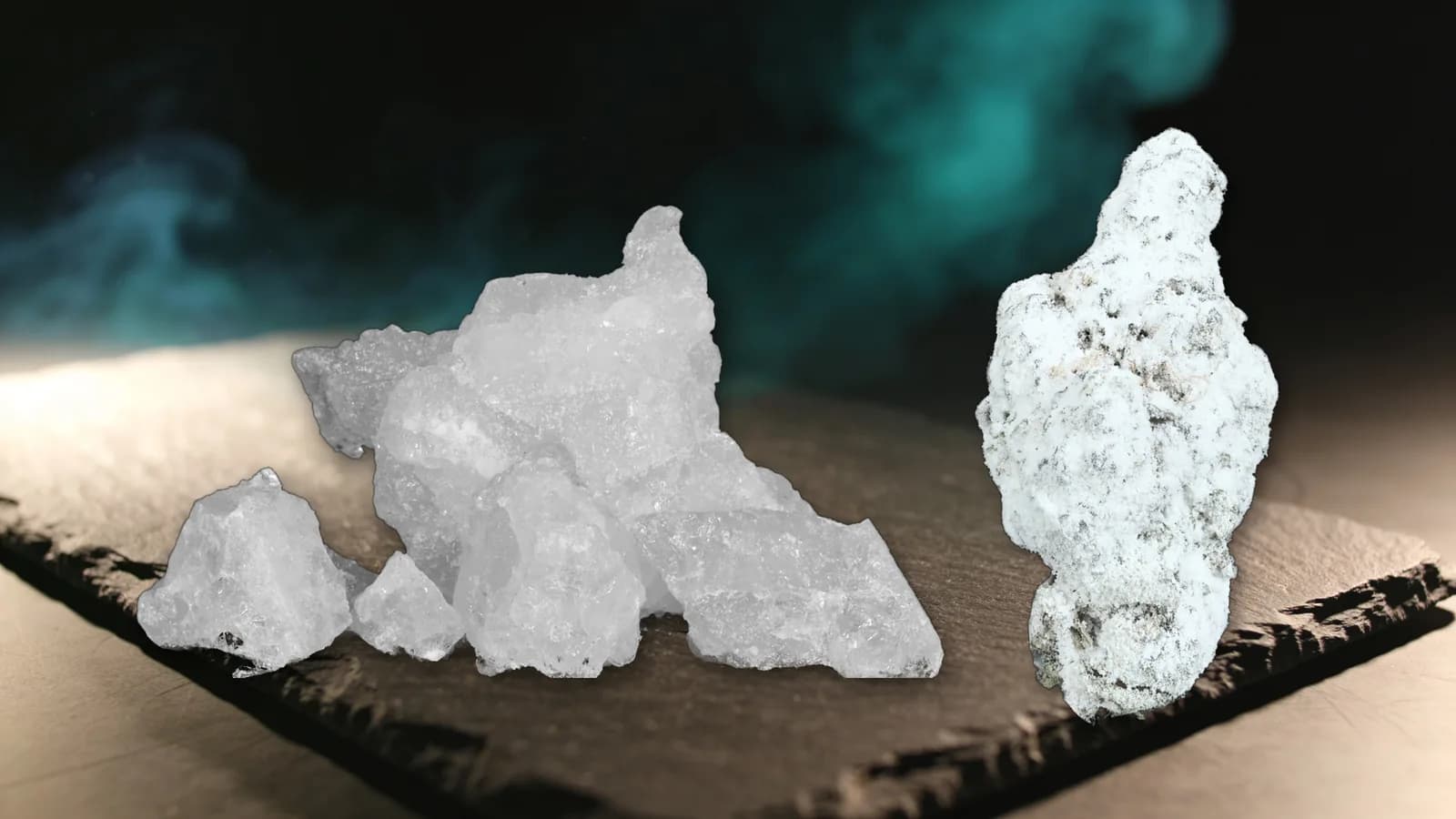
What is THCA?
THCA stands for tetrahydrocannabinolic acid. It is the form the living plant makes in its trichomes, the frosty glands that coat the buds. A fresh or cured bud holds mostly THCA and only a little THC.
The number on a weed label is usually called THC, but most of that figure is THCA waiting to be heated. The plant never makes much THC by itself; you make it when you light the bowl.
THCA vs THC: the difference
THC is THCA minus one small chemical group, which heat knocks off:
| THCA | THC | |
|---|---|---|
| What it is | The raw acid the plant grows | Delta-9 THC (tetrahydrocannabinol), the active form made by heat |
| Gets you high? | Not on its own | Yes |
| Where you find it | Bud, THCA diamonds, snowball coating | Smoke and vapour, distillate, edibles |
| How it changes | Turns into THC when heated | Slowly breaks down to CBN with age |
THCA is the starting point and THC is what you end up with. The CBN guide covers the last step, when old THC fades into CBN.
Does THCA get you high?
THCA gets you high once it is heated, and not before. Raw, it does not fit the brain's cannabinoid receptors well, so eating or juicing raw bud will not get you high.
The heat works almost straight away. A flame, a hot coil or a dab nail turns most of the THCA into THC the moment you inhale. That is why THCA-rich flower smokes exactly like regular weed: it is regular weed.
How THCA turns into THC
Heat breaks off part of the THCA molecule, a carboxyl group, which leaves as carbon dioxide. What remains is THC, also called delta-9 THC. The process is called decarboxylation.
It happens fast at smoking temperatures and slowly at room temperature, which is why heat and light wear down stored weed over time. Our THCA Diamonds come with the same warning: keep them cool, because warmth slowly converts the THCA.
Losing that piece also costs a little weight. THC is about 88% of the weight of the THCA it came from. That is why lab reports list THCA, THC and total THC, where total THC is the THC already there plus 0.877 times the THCA. A bud that tests 25% THCA and 1% THC comes out at about 23% total THC.
How to decarb weed in the oven
For smoking, vaping or dabbing you never need to decarb, because the heat does it for you. That is also why decarbed weed is no stronger in a joint. For edibles, you do need it: butter or oil made from raw bud stays mostly THCA and barely works. The standard home method:
- Heat the oven to 105 to 120°C (about 220 to 250°F). 115°C (240°F) is a safe middle. Hotter speeds things up but burns off flavour and some THC. Home ovens often run hot or cold, so an oven thermometer helps.
- Break the bud into small bits. Rice-grain to pea-sized pieces, broken by hand or coarsely ground. A fine powder scorches.
- Spread it in one layer on a parchment-lined tray.
- Bake for 30 to 45 minutes and stir once halfway. Go longer at the low end of the range and shorter at the high end. In a 2016 lab study, THCA heated to 110°C had almost all turned into THC after about 30 minutes.
- Check the colour. It is ready when it looks dry and lightly toasted, a shade darker than it went in.
- Cool it, then infuse. Stir it into warm butter or oil for your recipe. Our cannabutter guide has the ratios and the full method.
Expect a strong smell while it bakes. Covering the tray with foil, or baking the bud in a sealed oven bag, keeps most of it in. To skip the step, use something already decarbed: our 10g THC Distillate Syringe is decarboxylated and stirs straight into butter or oil. Decarbing diamonds has its own section in our THCA diamonds guide.
THCA flower, snowballs and diamonds
THCA flower is cannabis flower described by its THCA number, since THCA is what sits in the bud before you light it. Any cured bud is THCA flower in that sense.
Some products add THCA on top. Our THCa Snowballs are buds coated in 99% THCA isolate, which lifts them to the 50 to 55% range on the label. You smoke them like any bud, in glass or mixed into a joint, and the heat converts the coating with the flower. The snowball weed guide goes into strength and rolling.
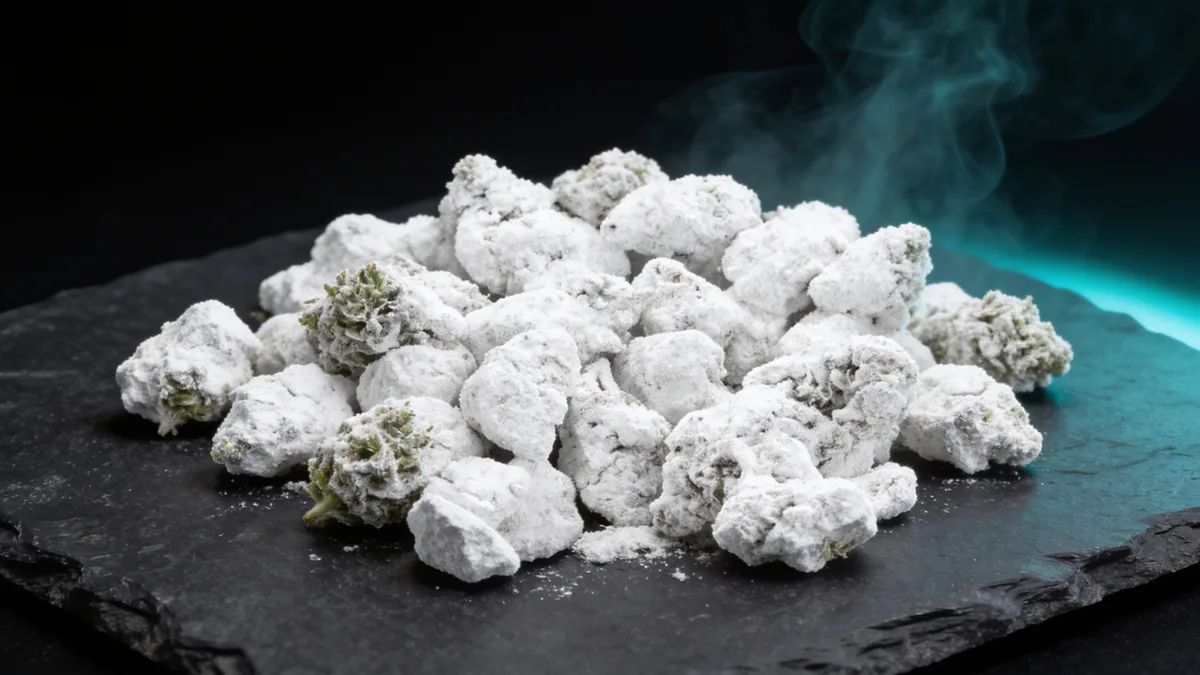
At the far end are THCA Diamonds: faceted crystals of 99% THCA. They are dabbed on a hot quartz banger, around 450 to 550°F with a carb cap, which turns the crystals into THC vapour in one hit.
The same 99% THCA also comes as a fine white powder: THCa Isolate has no taste or smell, and it can be dabbed, added to a bowl or decarbed for edibles.
Is THCA stronger than THC?
No. Once it is heated, THCA simply is THC, minus the small weight it loses on the way. A product high in THCA is strong because there is so much of it, not because THCA hits harder.
Raw THCA is different. A gram of crystals hits very hard in a dab, but the same crystals stirred into cold food barely register until they are heated.
Where to buy THCA in Canada
Everything THCA on our menu is made in-house in BC. Snowballs come in several strains on THCa Snowballs, and pure crystals are under THCA Diamonds. Orders ship Canada-wide in Stealth Packaging.