What Is CBG?
CBG is short for cannabigerol, one of more than 100 cannabinoids the cannabis plant makes. People call it the mother cannabinoid because of where it sits in the plant's chemistry. The plant first makes CBGA, the raw acid form of CBG. As it grows, it turns most of that CBGA into THCA, CBDA and CBCA. Heat later turns those acids into the THC and CBD people know.
That is also why CBG is rare. By harvest, most of the CBGA has already been converted, so typical plants carry only a small amount of CBG. Products like CBG isolate come from plants bred to hold on to more of it, which are then extracted and refined down to the single compound.
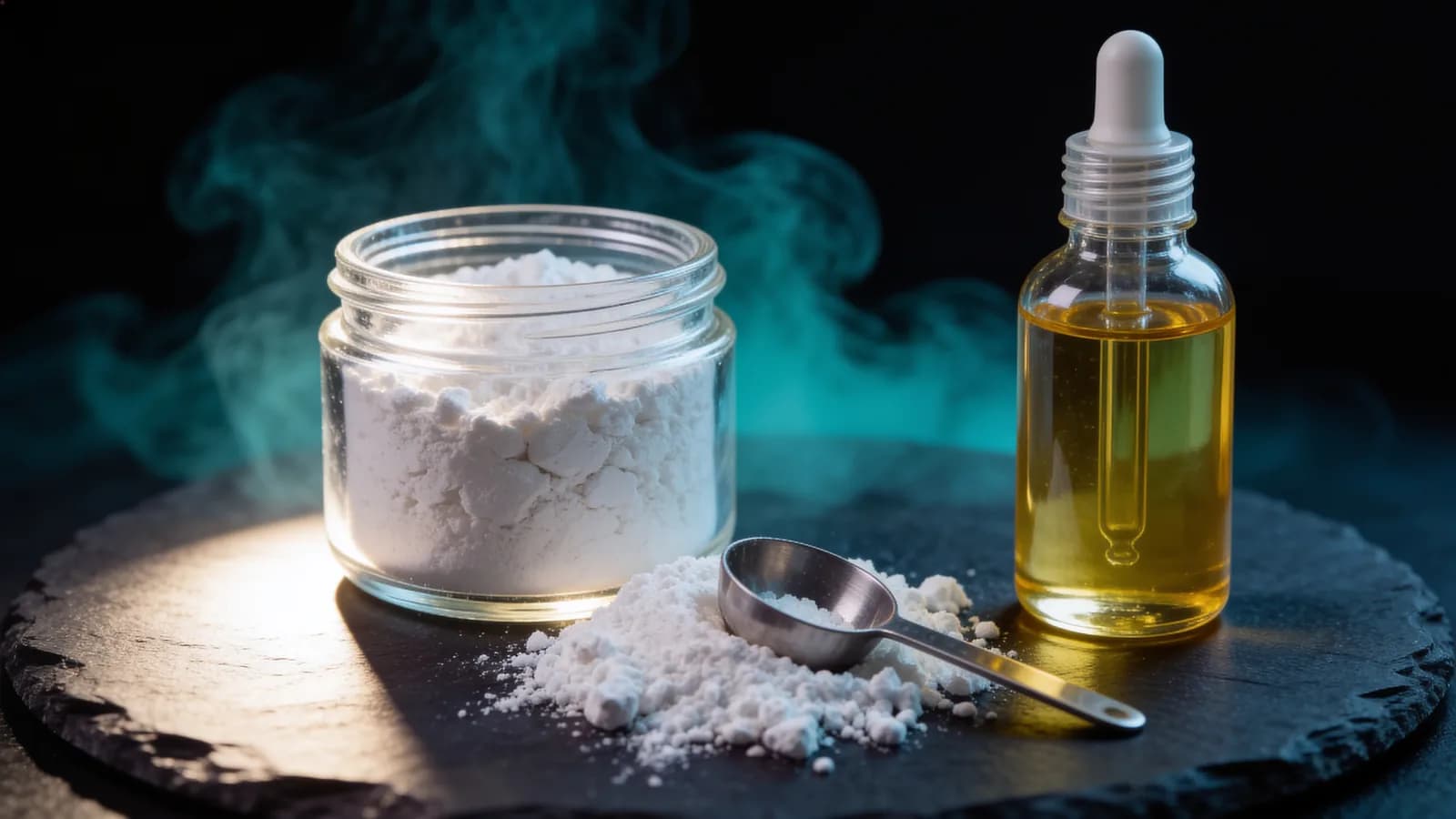
On the shelf, that looks like a fine white powder with no smell and almost no taste. Our CBG isolate is exactly that: a powder you weigh out and mix into whatever you are making.
Does CBG Get You High?
No. CBG does not cause the high that THC does. It does connect with the body's cannabinoid receptors, more directly than CBD but far more weakly than THC, and that is not enough to make you feel stoned.
The best evidence comes from the first placebo-controlled trial of CBG in people, published in 2024. Thirty-four healthy adults took a 20 mg CBG tincture on one day and a placebo on another. After CBG they reported no feeling of being high, and an impairment test showed no change.
So how does CBG make you feel? Most people describe something subtle: calm, clear-headed, maybe a bit more settled. If you expect a buzz, you won't get one. For most people who use CBG, that's the appeal.
What Does CBG Do? What People Use It For
Research on CBG is young. Most of what we know comes from one human trial, one survey of users and a stack of lab studies:
- Calm and stress. In the 2024 trial, people felt less anxious and less stressed after CBG than after the placebo, and did better on a word-recall test.
- The reasons people give. In a survey of 127 people who use CBG-rich cannabis, the most common reasons were anxiety (about half), chronic pain (about four in ten), low mood and sleep.
- Daytime use. Because it does not get you high and does not make most people sleepy, CBG is commonly taken during the day. Some people say it helps them focus, though there is no solid research on that yet.
- Early lab research. Studies in cells and animals have looked at CBG and inflammation, gut health, appetite and bacteria. Interesting, but not proven in people.
So far, people mostly use CBG for a calmer, clearer day. The bigger claims you see online have not been tested in people yet.
CBG vs CBN vs CBD vs THC
All four come from the same plant and the same starting point, but they behave very differently:
| Cannabinoid | Where it comes from | Gets you high? | Commonly used for |
|---|---|---|---|
| CBG | Made first; the plant builds the others from it | No | Daytime calm and focus |
| CBN | Forms as THC ages with time, heat and air | Very mildly at most | Night-time blends |
| CBD | Made from CBG's acid form | No | Calm, taking the edge off THC |
| THC | Made from CBG's acid form | Yes | The classic high |
CBG vs CBN
These two sit at opposite ends of the plant's life. CBG is where the chemistry starts. CBN is where THC ends up as it slowly breaks down in older flower. That difference carries through to how people use them: CBG for the daytime, CBN for the evening, often in a night-time oil or edible. Neither is a sedative in the medical sense, but if you want a cannabinoid for winding down, CBN isolate is the one people reach for. Plenty of people keep both, CBG for the day and CBN for the night.
CBG vs CBD
Both are non-intoxicating, both come as white isolate powders, and they are often mixed. The difference is mostly in how they work: CBG connects with the cannabinoid receptors more directly, while CBD mostly works around them. CBD has far more research behind it. If you already use CBD isolate, adding a little CBG is the most common way people try it.
CBG vs THC
THC gets you high. CBG does not, even in large amounts. Some people add a pinch of CBG isolate to a bowl or joint of their usual flower. It does not change the taste, because isolate has none.
How to Use CBG Isolate
Isolate is an ingredient, so the real question is what you put it in. Three common ways:
Make your own CBG oil or tincture
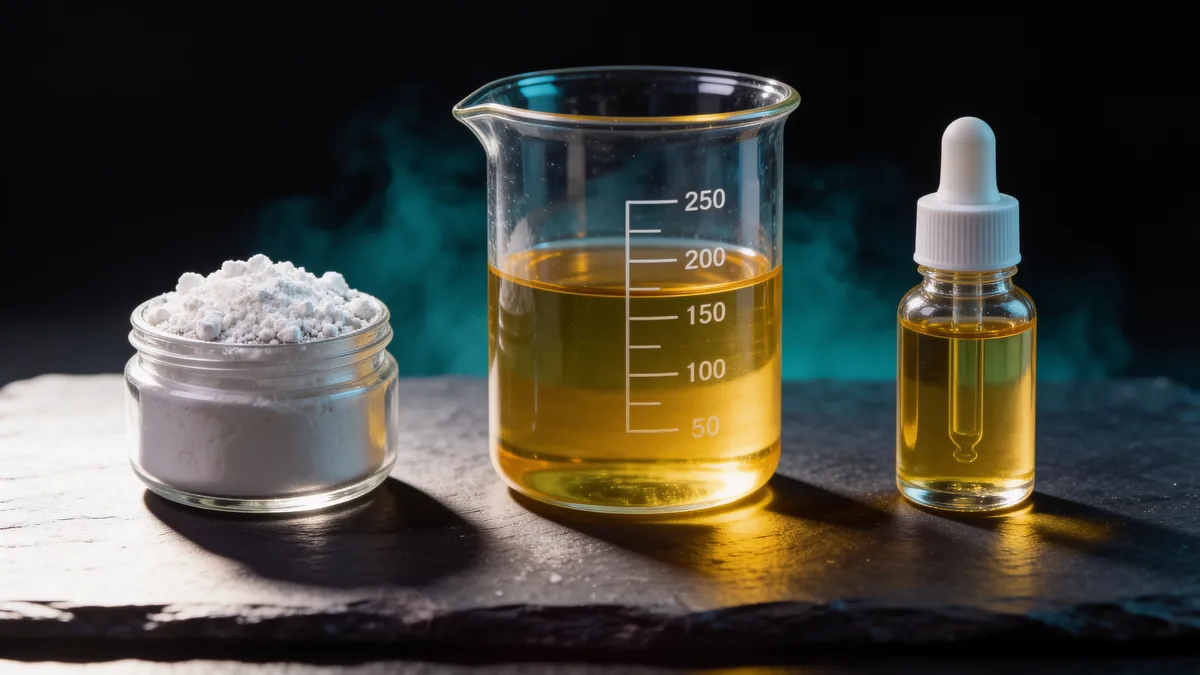
Weigh the powder on a milligram scale and stir it into a warm carrier oil, such as MCT or olive oil, on low heat until it disappears completely. Let it cool and store it in a dark dropper bottle. The maths is simple: 1 gram of powder in 30 ml of oil gives about 33 mg of isolate powder per millilitre, which is roughly one full dropper.
Cook it into edibles
CBG dissolves in fat, so melt it into butter or oil first, then use that in your recipe. Mix well so every portion gets the same amount, and label what you make.
Add it to flower or a dab
A light dusting over a bowl or inside a joint is the simplest way to add CBG to a session you already enjoy. Some people dab it on its own or with their usual concentrate, since isolate melts at a low temperature. Go lightly, because too much powder makes a bowl burn unevenly.
How Much CBG Should You Take?
There is no official dose. The 2024 trial used 20 mg, and CBG oils and gummies on the market are commonly portioned somewhere between 10 and 25 mg. The standard advice is to start at the low end, keep notes, and adjust slowly over a few days.
Side effects seem mild. In the survey, 44% of users reported none at all. The most common were dry mouth (about one in six), sleepiness, a bigger appetite and dry eyes. Like CBD, CBG is processed by the liver, so if you take prescription medication, check with a pharmacist first, and skip it if you are pregnant or breastfeeding.
Where to Buy CBG in Canada
You will find CBG with our other single-cannabinoid powders on the isolates page. CBG isolate starts at $34.99 for 3.5 g, with bigger sizes for anyone making their own oils or edibles in batches. Pair it with CBN for the evening or CBD for a gentler everyday blend. Every order ships across Canada in Stealth Packaging by tracked courier.
Sources
- Cuttler C, Stueber A, Cooper ZD, Russo E. Acute effects of cannabigerol on anxiety, stress, and mood: a double-blind, placebo-controlled, crossover, field trial. Scientific Reports, 2024. Read the study
- Russo EB, Cuttler C, Cooper ZD, Stueber A, Whiteley VL, Sexton M. Survey of patients employing cannabigerol-predominant cannabis preparations: perceived medical effects, adverse events, and withdrawal symptoms. Cannabis and Cannabinoid Research, 2022. Read the study
- Nachnani R, Raup-Konsavage WM, Vrana KE. The pharmacological case for cannabigerol. Journal of Pharmacology and Experimental Therapeutics, 2021.