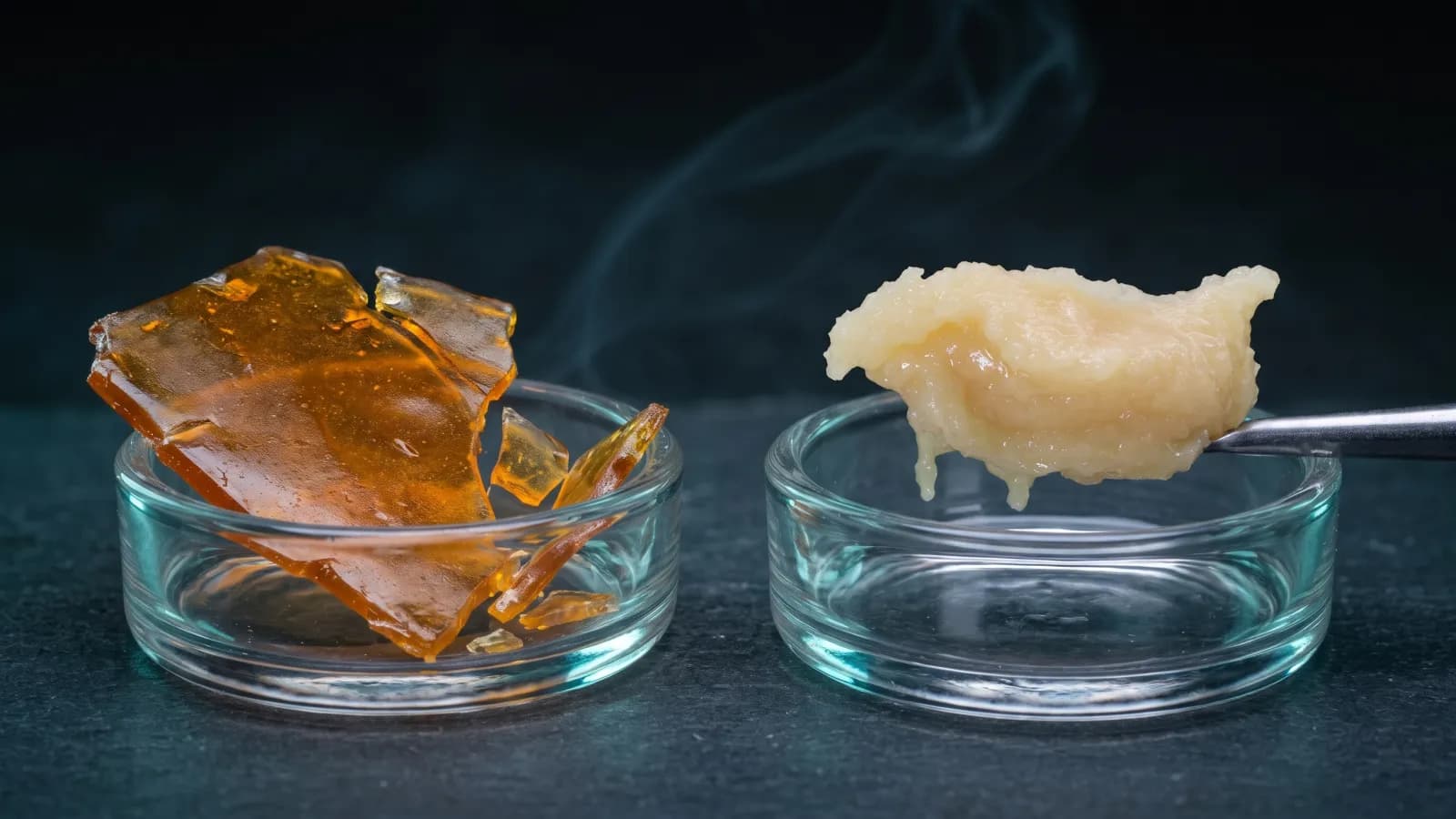
What's the difference between cured resin and live resin?
Only the starting plant. Both are washed out of the plant with a solvent like butane or propane in a closed loop, and the solvent is purged off afterward. Cured resin is made from buds that were dried and cured, the same kind you would smoke. Live resin is made from plants frozen on the day they are cut and kept frozen until extraction, so the drying step never happens.
| Cured resin | Live resin | |
|---|---|---|
| Starting plant | Dried and cured buds or trim | Plants frozen at harvest |
| Smell and taste | Earthier, closer to dried bud | Brighter, closer to the fresh plant |
| Colour | Usually darker amber | Usually lighter yellow to gold |
| Common textures | Shatter, wax, budder, sugar | Sauce, sugar, budder |
| THC on the label | A similar range | A similar range |
| Price | Lower | Higher |
| Best for | Value, a classic dried-flower taste | Flavour-first dabs |
What is cured resin?
Cured resin is a solvent extract made from cannabis that was dried and cured first. A fresh bud is about three-quarters water when it is cut. It dries for one to two weeks, then usually cures in containers for another two to three weeks, the same way flower is prepared for smoking.
That dried material is then washed with a hydrocarbon solvent in a closed loop, and the solvent is purged off with gentle heat and vacuum. Most of the classic extracts are cured resin: shatter, wax, crumble and plenty of budder. You may also see "nug run", made from buds, and "trim run", made from the small trim leaves.
It is a buy-it product, not a make-it product. Hydrocarbon extraction belongs in professional closed-loop equipment.
And what makes live resin "live"?
The plant is never dried. Ours goes from harvest to flash-freeze on the same day, then through cold extraction in our in-house BC lab. "Live" describes what goes in, not the texture that comes out. Our live resin guide walks through the process.
Why does live resin taste more like the strain?
A strain's smell lives mostly in its lightest terpenes, and those are the first to leave as a bud dries. A 2021 review puts the loss from ordinary room-temperature drying and curing at 31 to 55% of those light terpenes, depending on how long it runs.
You can taste the shift. In a study on hemp flowers, even the gentlest of seven drying methods lost 15% of the aroma compounds, and the harshest lost 48%. Tasters described the fresh flowers as citrus, fresh vegetables and balsamic, and the dried ones as hay, wood, earth and cooked.
Dried weed still smells like weed: the same compounds are there, just less of the lightest ones. Candy strains show the gap best. The sweet, fruity terpenes in our Watermelon Bubblegum live resin are the first thing a normal dry and cure would take away.
Careful drying narrows the gap. In one study, a slow, controlled dry kept most of one strain's light terpenes. So a cured resin made from good, well-dried flower can taste great.
Which is stronger: cured resin or live resin?
On the label, they land in the same range. Drying takes out water and some of the smell, not the THC: in a storage study, total cannabinoids barely changed over 74 days, while some THCA turned into THC. If anything, a terpene-rich live extract has slightly less room for THC by weight.
Our live resin jars are labelled 82 to 91% THC. Some smokers find cured resin feels heavier, but that is a report, not a measurement. The number on the jar matters more than the word on it.
Is cured resin or live resin better?
It depends on what you want from the jar. For flavour-first dabs, where the point is tasting the strain, live resin wins. For value, a classic dried-flower taste, or topping a bowl or a joint, cured resin does the job for less.
The plant and the care matter more than the label. A cured resin from good flower that was dried slowly will beat a live resin made from tired plants or run hot.
Why is cured resin cheaper?
Dried flower is stable, so it can wait for extraction. Live resin can't: the plants have to be frozen the day they are cut, stored frozen and extracted cold. And since about three-quarters of a fresh bud is water, that means freezing, storing and washing far more weight for the same amount of oil. Cured resin also tends to give more per run.
Does sauce, badder or shatter tell you if it's live or cured?
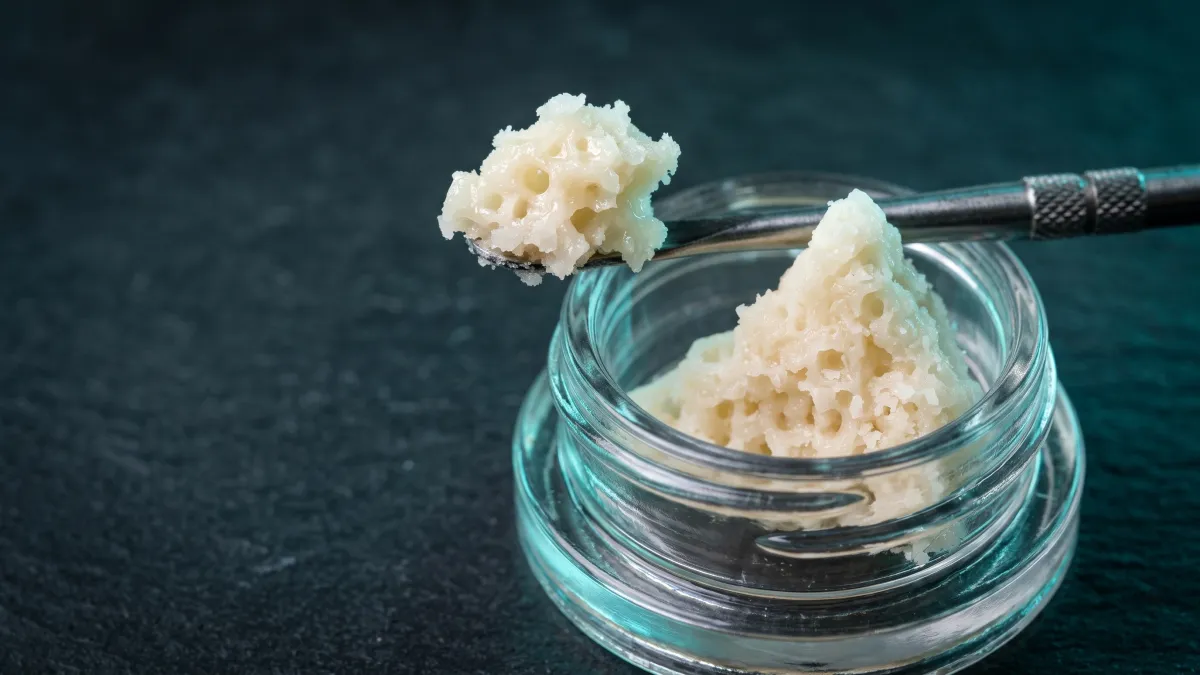
No. Texture comes from how the oil is handled and purged after extraction, not from the plant that went in. Shatter, slow-purged into a glassy sheet, is usually cured. Sauce is usually live, because the heavy terpene load keeps it wet. Sugar and budder can be either.
Live resin isn't always sauce. Our Gelato Cake live resin sets as a buttery budder with a fine sugary grain, while Blue Zkittlez comes out as coarse golden sugar. A jar that turns grainy over time is just THCa crystallizing out, which is normal.
Leave an extract to rest under the right conditions and that THCa grows into large crystals, which is how Watermelon Bubblegum Diamonds and Sauce is made. Our guide to THCa diamonds covers the rest.
What does "cured" mean on rosin, or on cured live resin?
"Cured" gets used for two different things. Before extraction, it means the plant was dried and cured, as in cured resin. After extraction, it means the oil was rested to set its texture. Live rosin is often "cold-cured" after pressing into a creamy badder, and that is a rest for the oil, not the plant.
So a jar called "cured live resin" is usually live resin that was left to set or sugar after extraction. Check the label for "live" or "fresh frozen".
Resin and rosin aren't the same either. Resin is washed out with a solvent. Rosin is squeezed out with heat and pressure and no solvent, and our live hash rosin is pressed from ice water hash. Distillate is different again: it is refined until little but the THC is left, so cured resin keeps far more of the plant than distillate does. Our live resin vs live rosin vs distillate guide compares all three.
Is FSE live or cured?
It can be either. "Live" and "cured" describe the plant going in. "Full spectrum" describes what comes out: an extract that keeps the plant's terpenes and cannabinoids together instead of refining them away. HTFSE is the high-terpene, saucy part of it. Our full spectrum extract page explains the fractions.
How can you tell which one you're buying?
- Read the label. "Live" or "fresh frozen" means live. "Cured", "nug run", "trim run", or a plain shatter, wax or budder with no "live" on it is almost always cured.
- Smell it when the lid comes off. Live resin smells like the fresh strain; cured smells more like dried bud, earthier and rounder.
- Look at it. Live is usually lighter and wetter, cured darker and firmer. Heat, age and light also darken an extract, so colour backs up the label but doesn't replace it.
- Ask the maker. A shop that makes its own extracts can tell you what went in.
Our live resin is made in-house in BC from plants frozen the day they are cut, and it is on sale right now. Our Cheap Dabs shelf puts the live resin and FSE jars side by side.