What do you need to roll a joint?
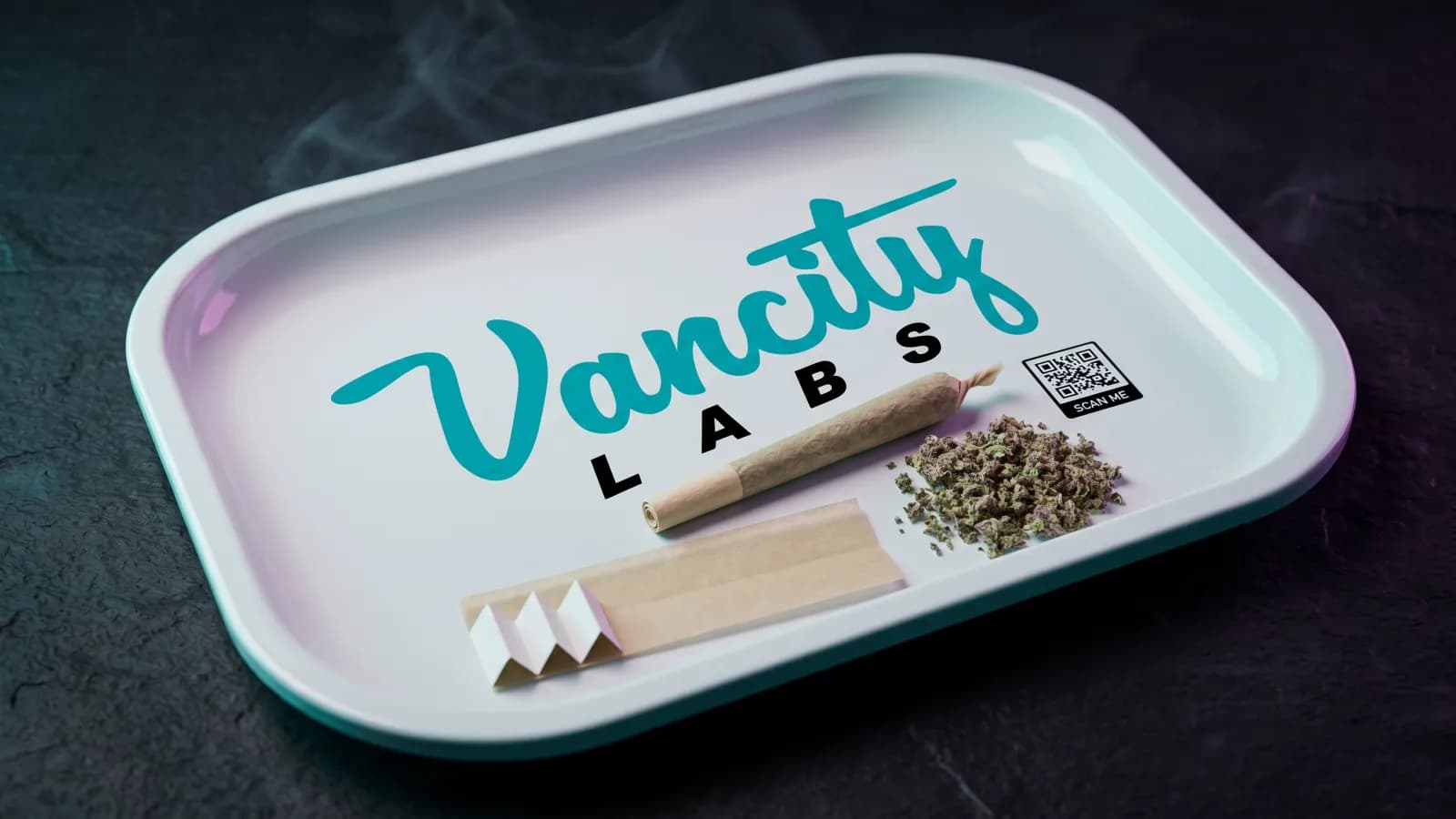
Rolling papers, a strip of thin card for the crutch, ground flower and a flat surface. A grinder makes the flower easier to roll, and a tray keeps the crumbs off the floor.
- Papers. The 1¼ size is the everyday joint paper and the easiest to learn on. Pick plain, unprinted papers.
- Card for the crutch. A short strip of thin card.
- Flower. Any bud works once it is ground. A+ Smalls are the value pick for rolling, because small buds grind the same as big ones.
- A tray. The raised rim on our rolling tray keeps loose crumbs on the tin, and leftovers tip into one corner for the next roll.
Why plain papers? A 2024 lab study of rolling papers found copper-based pigments in some coloured ones, and worked out that a frequent smoker of those could take in more copper than the limits set for medicines. Coloured, printed and metallic papers aren't worth it.
How do you roll a joint?
- Grind the flower. Break it into a fluffy, even crumb and pick out any stems or seeds. With our aluminum grinder, load the chamber loosely and give it a few half-turns back and forth before full turns, so the middle doesn't turn to dust.
- Make the crutch. Fold one end of the card into three or four small zigzags, like an M or a W, then roll the rest of the strip around them into a firm tube.
- Fill the paper. Hold the paper with the glue strip on the far edge, facing you. Set the crutch at one end and spread the flower evenly along the crease.
- Shape it. Pinch the paper between your thumbs and index fingers and roll it back and forth until the flower packs into an even tube. This is where the joint gets its firmness, so take your time.
- Tuck and roll. Start at the crutch end, where it is stiffest. Tuck the near edge of the paper around the flower, then roll up until only the glue strip shows.
- Seal it. Give the glue strip a light lick and press it closed from the crutch outward. Too much spit soaks thin paper and tears it.
- Pack and twist. Tap the crutch end on the table, push the flower down at the open end with a pen or a poker, then twist the spare paper shut.
Take a dry pull before you light it: air should come through with a little resistance. To light it, hold the flame just off the tip and turn the joint until the whole end glows, then draw slowly.
How fine should you grind weed for a joint?
Aim for a medium, even crumb, about the texture of dried oregano. Chunks leave air gaps, burn unevenly and can tear the paper. Powder packs too tight and is hard to pull through.
No grinder? Pull the buds apart with your fingers, or snip them with clean scissors in a small cup. It is slower and less even, so break up any clumps before you load the paper. Very sticky buds clump the same way, so spread the crumbs out first.
Flower that has dried out burns fast and harsh, and damp flower won't stay lit. Keep it sealed, cool and dark between rolls.
How do you make a crutch, and do you need one?
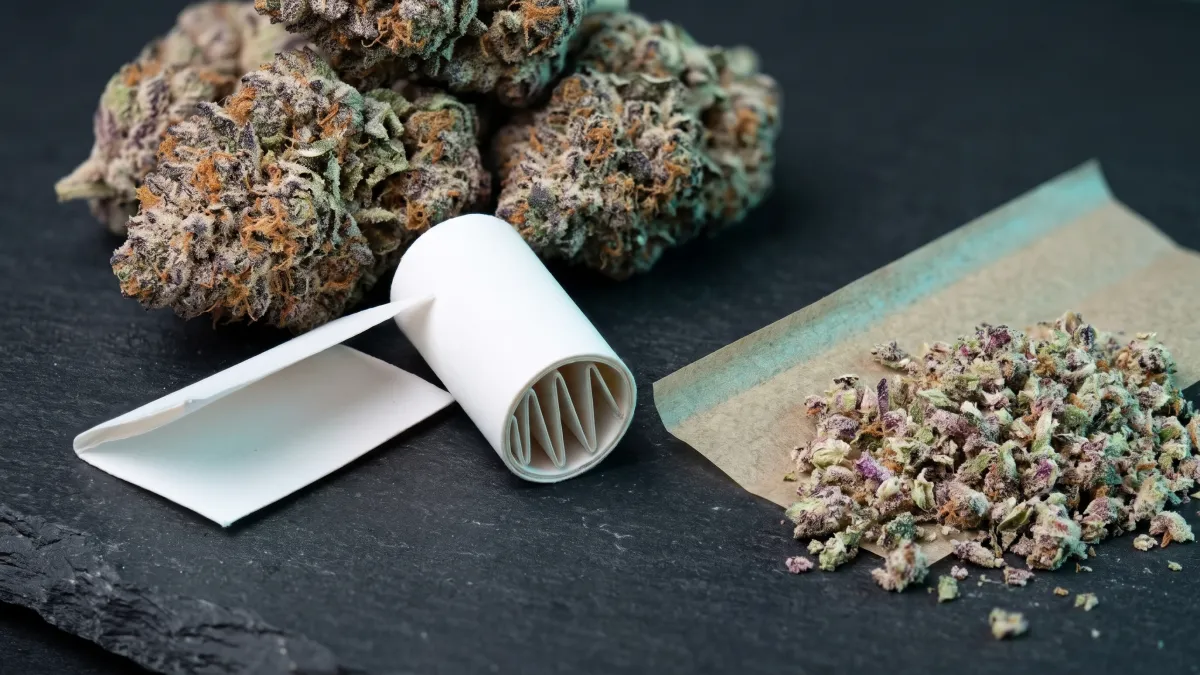
The crutch, also called a filter or tip, is the rolled card at the mouth end. It gives you something firm to roll around, keeps crumbs out of your mouth and lets you smoke the joint to the end without burning your fingers. Make it a little narrower than the joint so it slides in snugly.
It is card, not a cigarette filter, so it doesn't clean the smoke. You don't strictly need one, and plenty of people roll without. But it makes the first few joints far easier to roll, so start with one.
Names vary: in the UK the card itself is the roach, while in North America the roach usually means the leftover end of a smoked joint.
How much weed goes in a joint?
Most guides say half a gram to a gram, but the real average is smaller. A US study of more than 10,000 purchases put the average joint at about a third of a gram. Researchers in Barcelona who weighed 315 joints found people rolled about four to a gram. And in a London lab, smokers who measured out their usual joint put in about half as much cannabis as they guessed.
For a first joint, about half a gram in a 1¼ paper is the easiest amount to handle. That is two joints from a gram, and thinner joints stretch a gram to three or four. Our ounce of weed chart shows how many joints each size rolls.
For THC, multiply the weight by the label. A third of a gram of flower labelled 30% holds about 100 mg of THC on paper, though a good share of it is lost to the smoke. Our guide to how a joint compares with an edible runs the numbers.
How tight should you roll a joint?
Firm but springy. Squeeze it gently along its length: it should give a little and spring back, with no soft spots. Rolled too tight, it won't draw. Too loose, it sags, burns fast and hot, and tends to run.
A well-rolled joint is even from end to end, straight or a gentle cone, firm at the crutch, with a smooth seam and a twisted tip. The dry pull settles it: a little resistance is right, a struggle means it is too tight, and none at all means it is too loose.
Why does my joint canoe, run or keep going out?
Most problems come from an uneven roll or an uneven light. Here is what each one usually means and how to fix it.
| Problem | Usual cause | Fix |
|---|---|---|
| Canoeing: one side burns down the length | Lit from one side, an air pocket, or a clump of sticky bud or hash | Turn the joint as you light it. Touch the flame to the slow side, or dab a little water on the paper just ahead of the fast side. |
| Running: a thin line of burn races down the paper | A loose patch, a gap or the glue seam | Wet the paper just below the run, or let the other side catch up before the next pull. |
| Won't pull | Packed too hard, ground too fine, or a blocked crutch | Roll it gently between your fingers to loosen it, and clear the crutch with something thin. Next time, grind coarser and pack lighter. |
| Keeps going out | The end was never fully lit, or the flower is damp or packed too tight | Light the whole end evenly and take a couple of short puffs to set the ember. |
| Too loose | Not shaped enough before the tuck | Pack the open end down with a pen, or roll it again inside a second paper. |
| Harsh, hot smoke | Pulling too hard, very dry flower, or thick paper | Slow, gentle draws, flower kept sealed, and thin plain papers. |
| Paper tears | Too much spit, or a stem poking through | A light lick, and pick out stems before you roll. |
What's the easiest way to roll a joint as a beginner?
Practise with an empty paper first. Rolling it back and forth with nothing inside teaches the tuck, which is the hard part, without wasting any flower. Then try whichever of these suits you:
- Roll a cone. Angle the paper slightly at the crutch so it opens wider at the far end, and load a little more flower at the wide end. Cones are forgiving, and most pre-rolls are shaped this way.
- Fill a ready-made cone. Empty paper cones skip the rolling. Fill them a pinch at a time, tapping and packing as you go, then twist the top.
- Use a hand roller. A small hinged roller with a flexible belt shapes the joint for you. Load the flower, roll it a few turns, feed in the paper glue strip up, roll it in, lick and finish.
- Work over a tray. A bad attempt lands on the tray, not the floor. Unroll it and start again rather than sealing a joint you know is lumpy.
How do you add hash or kief to a joint?
Crumble the hash fine and sprinkle it down the middle of the flower before you roll. A dry bubble hash like our Tropicana Kush Bubble Hash breaks into crumbs between your fingers. Keep it away from the crutch: hash that melts at the mouth end blocks the airflow, and one big clump burns hotter than the rest and makes the joint canoe.
Roll a hash joint a touch looser than usual, and start with a small pinch, since our hash is labelled stronger than our flower. Kief goes in the same way, as a thin line through the middle. For softer hash, our guide to hash joints, snakes and hash holes covers the rest.
Do you roll a spliff or a blunt the same way?
A spliff, yes: it is a joint with tobacco mixed into the ground flower first. That is the norm in much of Europe. In a global survey of more than 33,000 people, most European cannabis smokers mixed in tobacco, against fewer than one in six in the Americas. A blunt is different, because the cigar or tobacco-leaf wrap is thicker than paper and needs a little moisture to soften it. Our joint, blunt and spliff guide compares all three.
Don't feel like rolling?
Our pre-rolls are cones of milled whole flower, single-strain with no shake or trim, grown and rolled in-house in BC. Pink Kush pre-rolls light the same way as a hand-rolled joint: hold the flame just off the tip and turn the cone until the whole end glows.