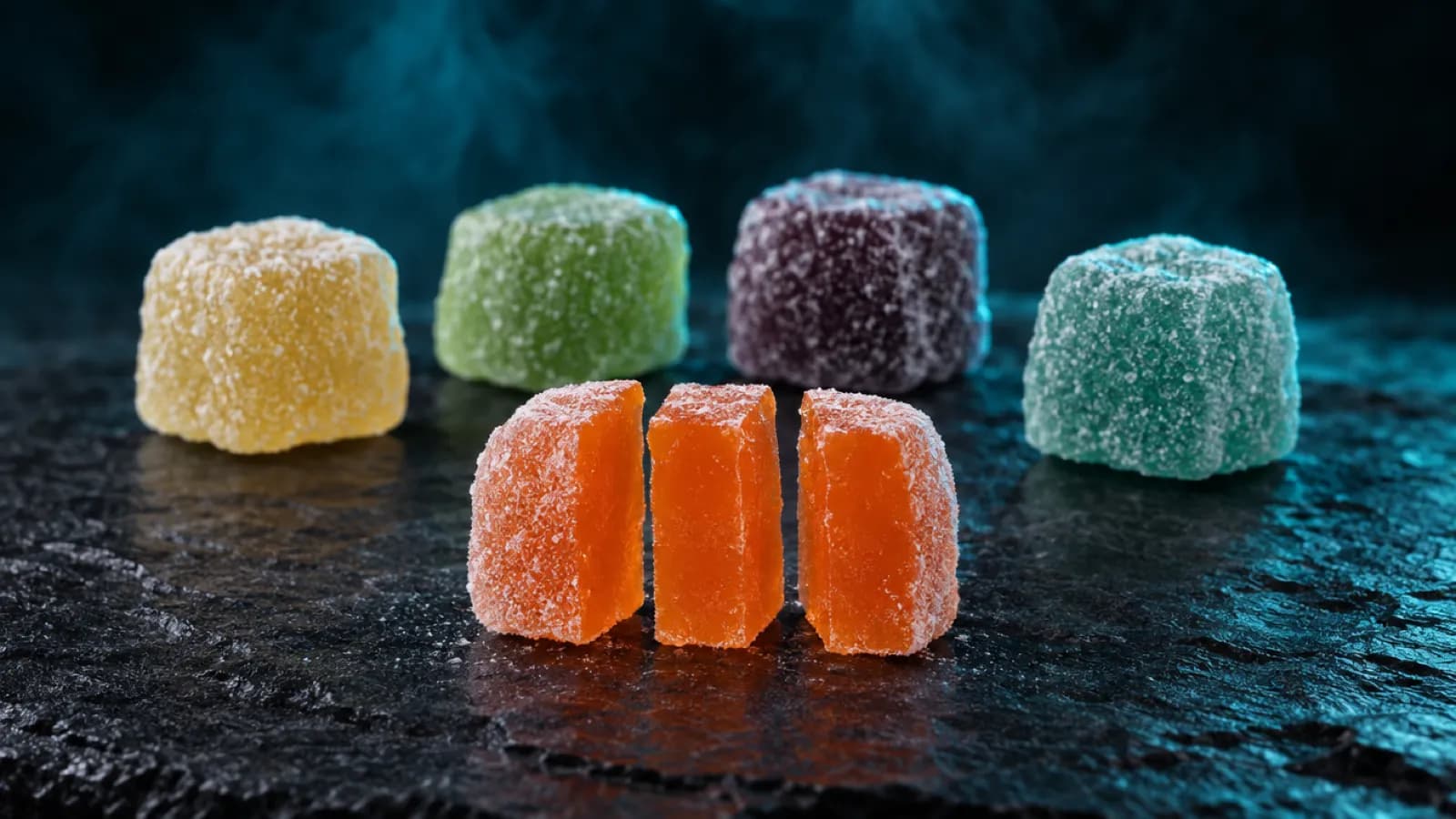
Is a 10mg edible a lot: one gummy cut into three equal slices beside whole gummies on dark slate
Edibles GuidesOctober 31, 2026|By VanCity Labs

Is a 10mg Edible a Lot? What 2mg, 5mg and 10mg Feel Like

Quick Answer

For someone who rarely uses cannabis, yes: a 10mg edible is a full dose. In a Johns Hopkins trial, 10mg gave a noticeable, mostly pleasant high with no side effects reported, while 25mg brought anxiety and a racing heart. For a daily smoker, 10mg often feels mild. The usual first try is 2.5 to 5mg.

The short answer

Is 10mg of THC a lot?

It depends on how often you use cannabis, and that one thing moves the answer more than anything else. For someone new to edibles, or someone who hasn't had one in a long while, 10mg is a full dose. For someone who smokes every day, the same 10mg can feel like very little.

The clearest numbers come from a Johns Hopkins dosing trial in adults who had not used cannabis for at least two months. On different days they ate brownies with 0, 10, 25 or 50mg of THC, without knowing which. Asked to rate how strongly they felt the drug on a scale of 0 to 100, they averaged 18 at 10mg and 38 at 25mg. At 10mg, people felt it, mostly as a pleasant effect, and their hearts beat a little faster. That was all. At 25mg came anxiety, a racing heart and slower thinking, and one person threw up about three hours in.

Researchers have proposed 5mg as one "standard THC unit", the way a standard drink works for alcohol. On that scale, a 10mg edible is two units.

Dose If you rarely use cannabis If you use it most days
1 to 2.5mgOften nothing; some notice a light liftUsually nothing
5mgA light, relaxed buzzMild, if you notice it at all
10mgA clear high, mostly pleasant; strong for someOften mild
15 to 30mgStrong; anxiety and a racing heart start to show upA normal serving; one of our gummies is 30mg

Treat the table as a starting point, not a rule. Two people with the same habits can land in different rows, and the section on why it varies explains the reasons.

Low doses

Will 2mg or 2.5mg of THC do anything?

Often not much, and for a first try that is the point. Around 1 to 2.5mg is what people call a microdose. In one small study, adults with very little cannabis history took a 2.5mg THC capsule, and on average it did not make them feel a drug effect at all. The researchers called it a threshold dose.

Other people do notice 2.5mg as a slight lift in mood or a little calm. A panel of doctors who prescribe THC recommends starting at 1 to 2.5mg and raising it slowly over days, so a microdose is a sensible place to find out how edibles sit with you.

Habit changes what you notice, too. In an older study, people who used cannabis often could tell 7.5mg of THC apart from a placebo, while people who rarely used it could not. At 15mg it flipped, and the rare users felt it more. If you want exactly 2mg, a measured syrup is much easier than a gummy; the last section shows how.

5mg

What does a 5mg edible feel like?

For most people trying edibles for the first time, 5mg is a light, relaxed buzz. It is one standard THC unit and the top of the usual starting range of 2.5 to 5mg.

Lab studies back up that gentle picture. In one, 5mg of oral THC barely moved heart rate, anxiety or how good people felt. In another, light users who took 7.5mg before a stressful task said the task bothered them less, while 12.5mg left them in a worse mood overall. Small steps up can change how a dose sits.

That is also why 5mg is not simply half of 10. For many newer users, going from 5 to 10 is the step where a light buzz turns into a proper high. For a daily smoker, 5mg may not register.

10mg

What does a 10mg edible feel like?

Nothing, at first. In the Johns Hopkins trials, an eaten 10mg dose started working 30 to 60 minutes in, peaked between about 1.5 and 3 hours, and faded over 6 to 8 hours. Our guide to how long edibles take to kick in covers that timing in detail.

At the peak, people who rarely use cannabis rated it as a clear and mostly pleasant high, with nothing unpleasant on average and a heart rate about six beats a minute faster. In a 2026 study at the University of British Columbia in Kelowna, people who took 10mg after breakfast felt most high between hours 2 and 5, and their reactions were slower for most of the six hours they were tested.

Averages hide a wide spread. In one trial, two of six people who ate 10mg never had THC show up in their blood at all. In the Johns Hopkins group, some people were clearly impaired at 10mg even though the group as a whole was not. That spread is why the advice stays the same for everyone: take one dose, then wait at least two hours before even thinking about more.

Edible vs joint

Is a 10mg edible stronger than a joint?

Not milligram for milligram. A joint holds far more THC than an edible: one large US analysis put the average joint at about 0.32g of flower, which at 20% THC is roughly 64mg on paper. Smoking wastes most of it, though. In a classic 1980 study, about 18% of the THC in a joint reached the blood, against about 6% from THC eaten in a cookie.
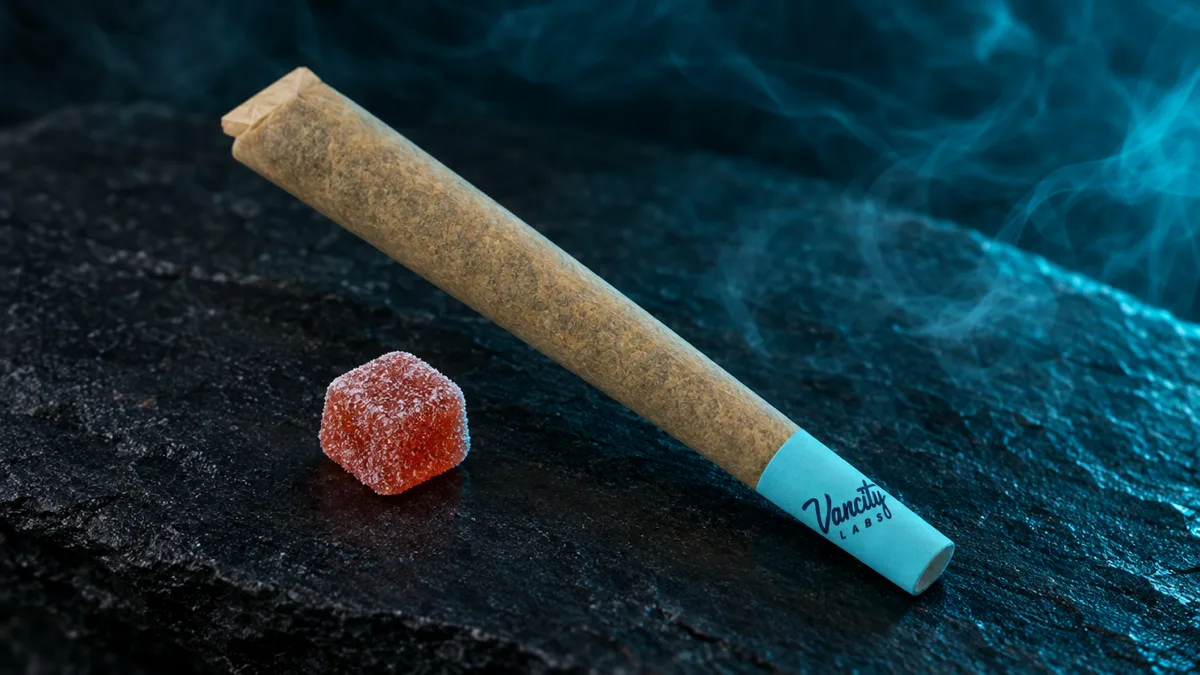
10mg edible vs joint: a cone pre-roll beside a single sugar-coated gummy on dark slate

The same Johns Hopkins lab also gave people with little cannabis history 10mg by smoking or vaping. They rated the drug effect 46 and 69 out of 100, where eaten 10mg peaked at 18. Different volunteers, so it is a side-by-side rather than a head-to-head test, but it points one way: per milligram, the edible's peak was gentler.

Edibles still earn their reputation, for three reasons. They arrive late, so people take more before the first dose lands. They last much longer, 6 to 8 hours against a few hours for smoking. And the liver turns part of the THC into another active compound, 11-hydroxy-THC, which adds to the effect. One Colorado hospital found edibles behind about 1 in 10 of its cannabis emergency visits, even though they were well under 1% of the THC sold.

So there is no honest "10mg equals X joints" number. Judge edibles in edible milligrams, and treat your smoking habit as a rough sign of tolerance rather than a conversion.

Higher doses

Is 15, 20 or 30mg a lot?

For a newcomer, yes. In the Johns Hopkins trial, 25mg roughly doubled how strongly people felt the drug and brought the unwanted effects with it: anxiety, a racing heart, feeling sick, and slower thinking and coordination. At 50mg, some people also felt paranoid and restless.

For regular edible users, 15 to 30mg is a normal serving. Every gummy on our BC edibles page is 30mg a piece, made in-house for people who already know their number, which is why a first-timer cuts one up instead of eating it whole. For 50mg and 100mg pieces and whole-pack maths, see our 1000mg edible guide.

Why it varies

Why 10mg hits one person hard and does nothing for another

Forum threads about 10mg edibles split down the middle: some people say it did nothing, others say it was far too much. Both can be true. These are the reasons with real evidence behind them.

  • Tolerance. The biggest one. A review of human studies found regular users feel the high less, and the memory and thinking effects fade the most. In one trial, frequent smokers who ate a brownie with about 50mg of THC rated it not much differently from a placebo. In heavy smokers, the brain's cannabinoid receptors were back to normal after about four weeks off, which is why an old dose can hit like new after a break.
  • Food. A big, fatty meal delays and stretches an edible rather than cancelling it. In a University of Alberta study, THC peaked in the blood about 6.6 hours after a capsule taken with a greasy breakfast, against under 2 hours on an empty stomach, and total exposure roughly doubled. People also report edibles feel stronger on an empty stomach.
  • Sex. Pooling four Johns Hopkins studies, women rated the same dose as stronger than men did and reported more anxiety and a racing heart, and the gap held after accounting for body weight.
  • Genes. The liver enzyme that breaks down THC comes in versions. People carrying two copies of a less common one had about three times the THC exposure from the same oral dose.
  • Body weight. Much less than people think. Two studies that checked found no link between body size and how high people felt.

If a 10mg edible did nothing, take a little more next session rather than the same night. If it hit too hard, it passes: go somewhere quiet, sip water, lie down and keep a sober friend nearby.

Measuring it

How to get a 2.5, 5 or 10mg dose from our edibles

Every gummy we sell is 30mg a piece, and every bottle of CannaLean syrup works out to 10mg in each millilitre, so the maths stays simple.

Dose From a 30mg gummy From CannaLean syrup
2.5mgA thin sliver, about a twelfth0.25 mL
5mgA small corner, about a sixth0.5 mL
10mgA third1 mL
15mgA half1.5 mL

Our Handcrafted gummy squares have flat sides that cut cleanly on a cutting board, and gummy worms snip into thirds with scissors. The 1000mg guide has a step-by-step on how to split a 30mg edible.

For 2mg or 2.5mg, syrup is far easier than a knife. CannaLean THC syrup has 10mg in every millilitre, so 0.2 mL is 2mg and 1 mL is 10mg. Measure with the measure on the bottle or an oral syringe rather than pouring, because a 5 mL teaspoon holds 50mg. The 100 mL bottle and the 30 mL mini are the same strength per millilitre; the mini is just smaller. Our THC syrup guide covers mixing it into a drink.

Every gummy and bottle is on our BC edibles and CannaLean pages.

10mg Edible FAQ

Is 10mg a lot for someone who smokes every day?

Often not. Tolerance builds with regular use, and in studies of daily smokers a 10mg THC capsule ranged from a modest high to barely anything. Eating is still a different route from smoking, so start an edible at 5 to 10mg rather than guessing from how much you smoke, and step up the next session if it was light.

Why did a 10mg edible do nothing for me?

Usually tolerance, a big meal, or how your own body absorbs THC, which varies a lot: in one trial, two of six people who ate 10mg had no THC show up in their blood at all. After a large, fatty meal the peak can also arrive hours later than expected. If nothing happened after a few hours, take a little more next session, not the same night.

Is going from 5mg to 10mg a big jump?

It can be. It doubles the THC, and for many newer users it is the step from a light buzz to a full high. If 5mg felt like nothing, try about 7.5mg, a quarter of one of our 30mg gummies, before going to 10.

How many 10mg edibles should I take?

One. Wait at least two hours, and if it was not enough, take more next time instead of stacking pieces the same night. Two 10mg pieces make 20mg, close to the 25mg dose where lab volunteers started reporting anxiety and a racing heart.

Is 2.5mg a microdose?

Yes. About 1 to 2.5mg is what people mean by a microdose: some feel a light lift, many feel very little. From one of our 30mg gummies that is a sliver of about a twelfth, so syrup is easier to measure: a quarter of a millilitre of CannaLean is 2.5mg.

Is a 10mg THC drink stronger than a 10mg gummy?

It is the same 10mg of THC. Emulsified or fast-acting formats can be absorbed sooner: in a 2026 trial, a fast-acting edible reached its peak blood level about 30 minutes earlier than a standard one, with the same total amount absorbed. Some people say they feel drinks sooner, but treat a drink like any edible and wait before having more.

How much THC is too much in one go?

There is no single number, because tolerance changes everything. For people who rarely use cannabis, lab trials found the unwanted effects climbing at 25mg and 50mg. Too much usually shows up as a pounding heart, panic or paranoia, nausea, or heavy confusion. It passes, but get medical help for chest pain, fainting or vomiting that will not stop.

Does CBD make a 10mg THC edible feel weaker?

Not reliably. In a 2023 trial, adding CBD at a 1:1 ratio and higher did not change how strong 10mg of THC felt, though that trial used vaping rather than edibles. In a separate trial, eating THC together with a very large amount of CBD made the high stronger, not weaker. If you want a gentler time, a smaller THC dose is the dependable lever.

Sources

  1. Schlienz NJ, Spindle TR, Cone EJ, Herrmann ES, Bigelow GE, Mitchell JM, Flegel R, LoDico C, Vandrey R. Pharmacodynamic dose effects of oral cannabis ingestion in healthy adults who infrequently use cannabis. Drug and Alcohol Dependence, 2020. Read the study
  2. Vandrey R, Herrmann ES, Mitchell JM, Bigelow GE, Flegel R, LoDico C, Cone EJ. Pharmacokinetic profile of oral cannabis in humans: blood and oral fluid disposition and relation to pharmacodynamic outcomes. Journal of Analytical Toxicology, 2017. Read the study
  3. Copeland PV, Malone Q, Dalton BH, McNeil CJ. A six-hour time series of the acute effects of ingested cannabis intoxication on a battery of cognitive-motor tasks. PLoS One, 2026. Read the study
  4. Freeman TP, Lorenzetti V. 'Standard THC units': a proposal to standardize dose across all cannabis products and methods of administration. Addiction, 2020.
  5. Ballard ME, de Wit H. Combined effects of acute, very-low-dose ethanol and delta(9)-tetrahydrocannabinol in healthy human volunteers. Pharmacology Biochemistry and Behavior, 2011. Read the study
  6. Bhaskar A, Bell A, Boivin M, et al. Consensus recommendations on dosing and administration of medical cannabis to treat chronic pain: results of a modified Delphi process. Journal of Cannabis Research, 2021. Read the study
  7. Kirk JM, de Wit H. Responses to oral delta9-tetrahydrocannabinol in frequent and infrequent marijuana users. Pharmacology Biochemistry and Behavior, 1999.
  8. Karschner EL, Darwin WD, McMahon RP, et al. Subjective and physiological effects after controlled Sativex and oral THC administration. Clinical Pharmacology and Therapeutics, 2011. Read the study
  9. Childs E, Lutz JA, de Wit H. Dose-related effects of delta-9-THC on emotional responses to acute psychosocial stress. Drug and Alcohol Dependence, 2017. Read the study
  10. Ridgeway G, Kilmer B. Bayesian inference for the distribution of grams of marijuana in a joint. Drug and Alcohol Dependence, 2016.
  11. Ohlsson A, Lindgren JE, Wahlen A, Agurell S, Hollister LE, Gillespie HK. Plasma delta-9 tetrahydrocannabinol concentrations and clinical effects after oral and intravenous administration and smoking. Clinical Pharmacology and Therapeutics, 1980.
  12. Spindle TR, Cone EJ, Schlienz NJ, Mitchell JM, Bigelow GE, Flegel R, Hayes E, Vandrey R. Acute effects of smoked and vaporized cannabis in healthy adults who infrequently use cannabis: a crossover trial. JAMA Network Open, 2018. Read the study
  13. Lemberger L, Crabtree RE, Rowe HM. 11-hydroxy-delta 9-tetrahydrocannabinol: pharmacology, disposition, and metabolism of a major metabolite of marihuana in man. Science, 1972.
  14. Monte AA, Shelton SK, Mills E, et al. Acute illness associated with cannabis use, by route of exposure: an observational study. Annals of Internal Medicine, 2019. Read the study
  15. Colizzi M, Bhattacharyya S. Cannabis use and the development of tolerance: a systematic review of human evidence. Neuroscience and Biobehavioral Reviews, 2018. Read the study
  16. Newmeyer MN, Swortwood MJ, Abulseoud OA, Huestis MA. Subjective and physiological effects, and expired carbon monoxide concentrations in frequent and occasional cannabis smokers following smoked, vaporized, and oral cannabis administration. Drug and Alcohol Dependence, 2017.
  17. Hirvonen J, Goodwin RS, Li CT, et al. Reversible and regionally selective downregulation of brain cannabinoid CB1 receptors in chronic daily cannabis smokers. Molecular Psychiatry, 2012. Read the study
  18. Lunn S, Diaz P, O'Hearn S, Cahill SP, Blake A, Narine K, Dyck JRB. Human pharmacokinetic parameters of orally administered delta-9-tetrahydrocannabinol capsules are altered by fed versus fasted conditions and sex differences. Cannabis and Cannabinoid Research, 2019. Read the study
  19. Dowd AN, Zamarripa CA, Sholler DJ, et al. A cross-sectional survey on cannabis: characterizing motives, opinions, and subjective experiences associated with the use of various oral cannabis products. Drug and Alcohol Dependence, 2023. Read the study
  20. Sholler DJ, Strickland JC, Spindle TR, Weerts EM, Vandrey R. Sex differences in the acute effects of oral and vaporized cannabis among healthy adults. Addiction Biology, 2021. Read the study
  21. Sachse-Seeboth C, Pfeil J, Sehrt D, et al. Interindividual variation in the pharmacokinetics of delta9-tetrahydrocannabinol as related to genetic polymorphisms in CYP2C9. Clinical Pharmacology and Therapeutics, 2009.
  22. Bedi G, Cooper ZD, Haney M. Subjective, cognitive and cardiovascular dose-effect profile of nabilone and dronabinol in marijuana smokers. Addiction Biology, 2013. Read the study
  23. Cooper ZD, Comer SD, Haney M. Comparison of the analgesic effects of dronabinol and smoked marijuana in daily marijuana smokers. Neuropsychopharmacology, 2013. Read the study
  24. Conner BT, Smith EE, DiCecco SM, et al. Pharmacokinetic differences between fast-acting, standard, and placebo cannabis edibles. Cannabis and Cannabinoid Research, 2026.
  25. Englund A, Oliver D, Chesney E, et al. Does cannabidiol make cannabis safer? A randomised, double-blind, cross-over trial of cannabis with four different CBD:THC ratios. Neuropsychopharmacology, 2023. Read the study
  26. Zamarripa CA, Spindle TR, Surujunarain R, et al. Assessment of orally administered delta-9-tetrahydrocannabinol when coadministered with cannabidiol on delta-9-tetrahydrocannabinol pharmacokinetics and pharmacodynamics in healthy adults: a randomized clinical trial. JAMA Network Open, 2023. Read the study