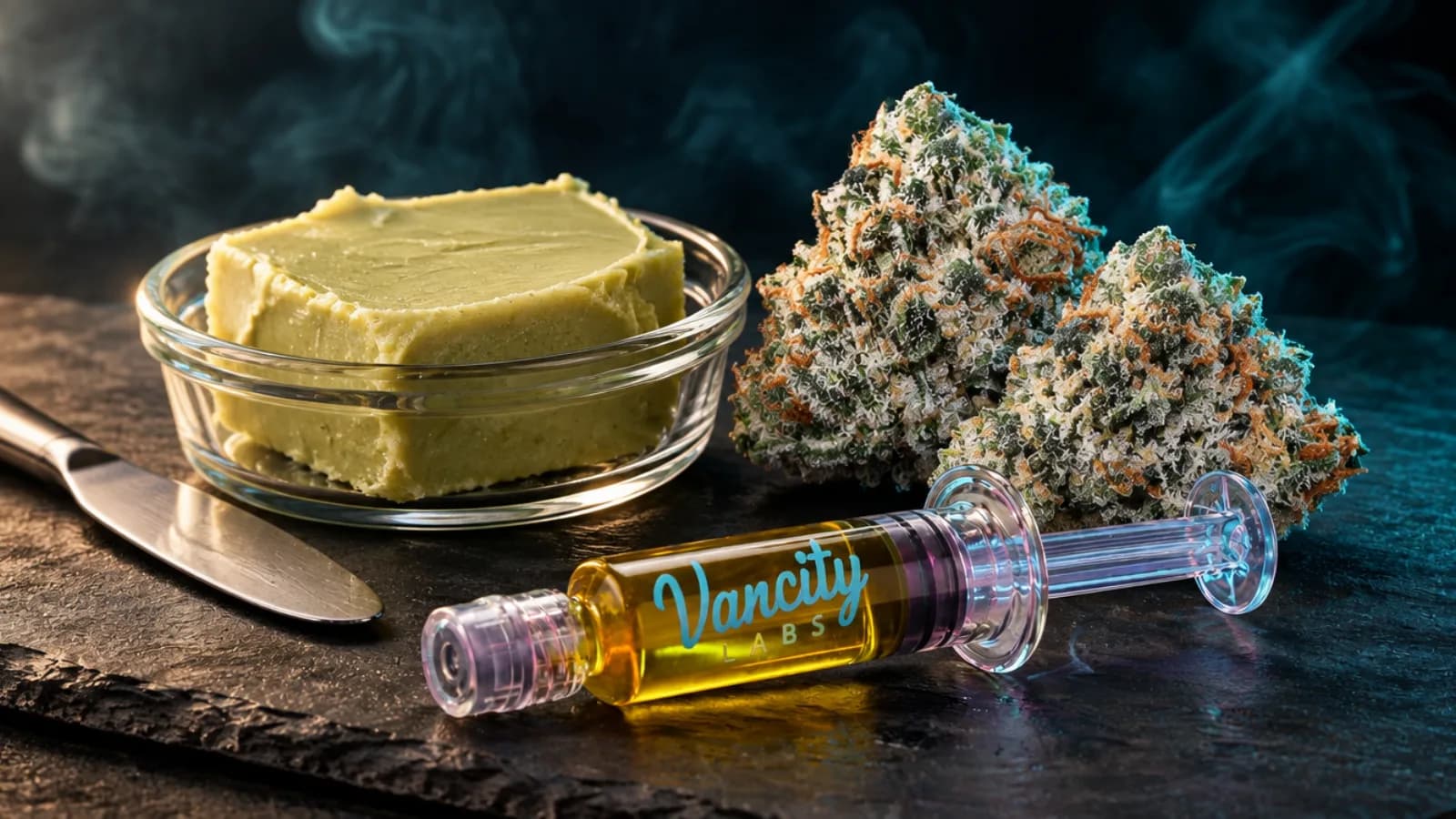
What do you need to make cannabutter?
Cannabutter is butter that has soaked up THC from cannabis. THC dissolves in fat, not water, which is why butter or oil is what carries it into baking.
There are two ways to get it there. Start from flower, and it takes a few hours, an oven step and a strainer. Start from distillate, and it takes about 15 minutes, because the THC is already activated. This guide covers both.
- Butter: 1 cup, about 225 g, which is half a standard 454 g block. Unsalted keeps the salt in your recipe under control.
- Cannabis: 3.5 to 7 grams per cup. Looks stop mattering once bud is melted into butter, so A+ Smalls (the same plants as our big buds, with the THC on every label) or an ounce from Cheap Weed do the job.
- A grinder or your fingers: our aluminum grinder on a few quick turns gives the coarse grind you want.
- For the oven step: a baking tray and parchment paper.
- For steeping: a small pot or a slow cooker, and a cup of water.
- For straining: cheesecloth or a fine sieve, and a container with a lid.
Or swap the cannabis, the oven and the strainer for one THC Distillate Syringe 1g. That's the easier way, further down.
How much weed per cup of butter?
Today's flower is strong, so a little goes a long way. 3.5 to 7 grams per cup of butter, an eighth to a quarter ounce, makes a butter you can still dose by the teaspoon. Our ounce of weed guide has every size in grams.
The math starts with the label: grams × THC % × 10 = milligrams of THC. Seven grams of 25% flower is 1,750mg on paper. Not all of it reaches the butter. The oven step never converts every last bit, and some THC stays in the plant you strain out. In a review of cannabis oil methods, steeping bud in oil just under boiling for two hours got about 62% of the THC into the oil. Plan on about 60%. Here is what that means for 25% THC flower in 1 cup of butter:
| Weed per cup | On the label | In the butter | Per tbsp | Per tsp |
|---|---|---|---|---|
| 1 g | 250mg | 150mg | 9mg | 3mg |
| 3.5 g (an eighth) | 875mg | 525mg | 33mg | 11mg |
| 7 g (a quarter) | 1,750mg | 1,050mg | 66mg | 22mg |
| 14 g (a half) | 3,500mg | 2,100mg | 131mg | 44mg |
| 28 g (an ounce) | 7,000mg | 4,200mg | 263mg | 88mg |
A cup of butter is 16 tablespoons or 48 teaspoons. If your flower is labelled 30%, every number above goes up by a fifth. Homemade butter is an estimate, not a lab result, so use the table to plan and start on the small side.
How to make cannabutter from flower
- Break it up. Grind the bud coarse, or break it into rice-grain pieces by hand. A fine powder slips through the strainer and makes the butter taste grassy.
- Decarb it. Spread it on a parchment-lined tray and bake at about 115°C (240°F) for 30 to 45 minutes, stirring once, until it looks dry and a shade darker. This turns the raw THCA into THC; bud that skips this step barely works in butter. Our THCA vs THC guide has the full oven steps. Expect a strong smell. Baking it in a sealed oven bag keeps most of it in.
- Melt the butter with water. Put 1 cup of butter and 1 cup of water in a small pot on the lowest heat. The water stops the butter from scorching, and it comes out again later.
- Steep for 2 to 3 hours. Stir in the decarbed weed and keep it hot but never boiling: a few lazy bubbles at most, around 80 to 95°C (180 to 200°F) on a kitchen thermometer. Stir every 20 to 30 minutes. A slow cooker on low with the lid on does the same job with less watching and less smell.
- Strain it. Pour it through cheesecloth or a fine sieve into a bowl. Press the plant gently with a spoon. Wringing the cloth hard pushes more plant taste into the butter.
- Chill it. Refrigerate until firm. The butter sets on top and the water, now green-brown, stays underneath. Lift the butter off, pour the water away and pat the bottom dry.
- Label it. Write the date, how many grams went in and your milligrams per teaspoon from the table on the lid. Keep it in the fridge, away from the regular butter and out of reach of kids and pets.
Making more than you'll use soon? Freeze it in an ice cube tray, one tablespoon per cube, so every cube is a known amount.
The easier way: cannabutter with distillate
If the oven, the smell and the straining sound like a lot, skip all three. Our THC Distillate Syringe 1g is labelled 90% THC, and it's already decarboxylated, so it works in food straight from the syringe. There's no plant to strain out, so the THC you squeeze in stays in the butter.
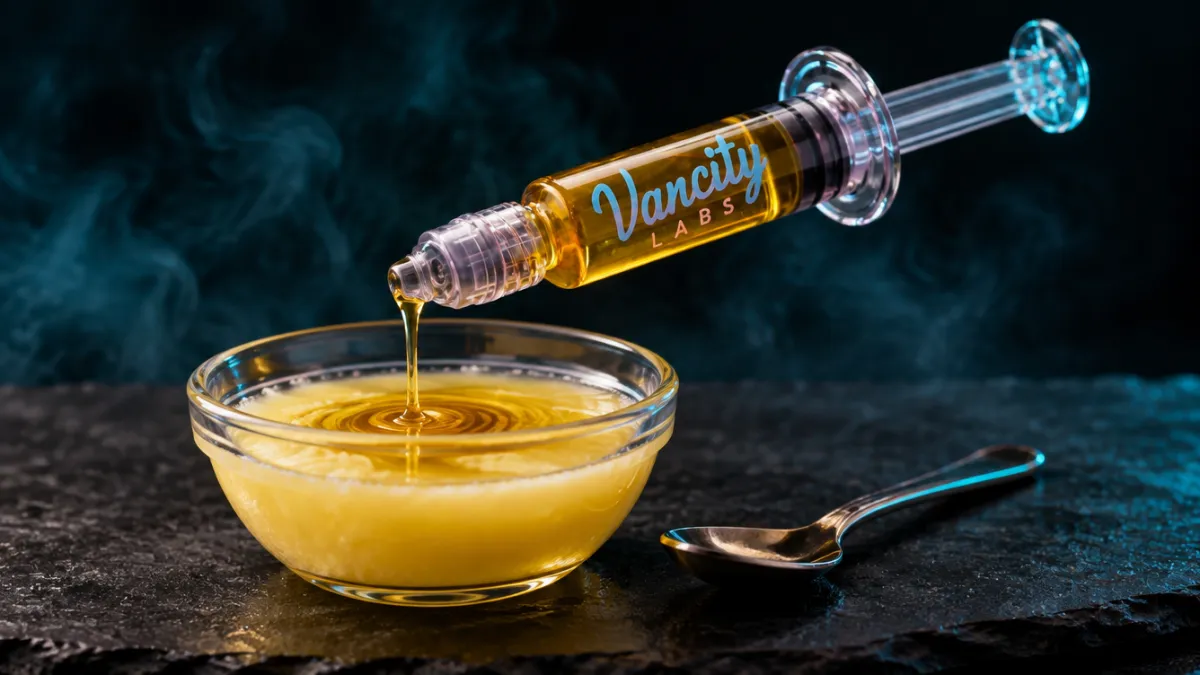
- Warm the syringe. Distillate firms up at room temperature. Hold the syringe in your hands for a few minutes, or seal it in a bag and stand it in warm, not boiling, water. Never microwave it.
- Melt the butter. Melt it on the lowest heat, then take it off the heat. No water needed, because there's nothing to separate.
- Squeeze and stir. Push in the distillate and stir for 2 to 3 minutes, until no golden streaks are left. Stir again now and then while it cools so it sets evenly.
- Chill and label. Store it like any cannabutter.
The math is short. A full 1g syringe holds about 900mg of THC by its label. Stirred into 2 cups of butter, that's about 9mg per teaspoon, so half a teaspoon is about 5mg. In 1 cup, it's about 19mg per teaspoon.
Baking for a crowd or for the holidays? The 10g THC Distillate Syringe holds ten times as much, enough for ten 2-cup batches. You can also skip the butter entirely: squeeze THC distillate straight into brownie batter or melted chocolate and mix it well. Our live resin vs live rosin vs distillate guide explains how distillate is made.
| From flower | From distillate | |
|---|---|---|
| Time | About 3 to 4 hours | About 15 minutes |
| Oven step | Yes, 30 to 45 minutes | No, already decarbed |
| Smell in the kitchen | Strong | Very little |
| Straining | Yes | No |
| Taste | Herbal, a little grassy | Close to plain butter |
| Dose math | An estimate (about 60% gets in) | Starts from the label number |
How strong is a cannabutter brownie?
Divide the THC in the butter you used by the number of pieces. A pan of brownies made with half a cup of the distillate butter above (about 225mg) and cut into 16 squares works out to about 14mg a square. A quarter of a square is about 3.5mg.
That quarter matters. The usual first dose of an edible is 2.5 to 5mg, and our 10mg edible guide explains what 2, 5 and 10mg feel like. Homemade batches never mix perfectly evenly either, so one square can run stronger than the next.
Then wait. In a lab trial with THC brownies, effects didn't start for 30 to 60 minutes and peaked 1.5 to 3 hours after eating. Give it about 2 hours before you have more; our edibles kick-in guide covers the timing. The classic mistake is eating a second piece because the first hasn't kicked in yet.
If you've had too much, stop eating, go somewhere calm and quiet, keep someone sober nearby and skip the alcohol. If someone feels very unwell, get medical help.
Rather not bake?
Our BC edibles are dosed for you: every piece is 30mg, so start with a small corner, about 2.5 to 5mg. Our guide to splitting edibles shows how. CannaLean THC syrup is 10mg per mL and stirs into a drink, measured with an oral syringe.